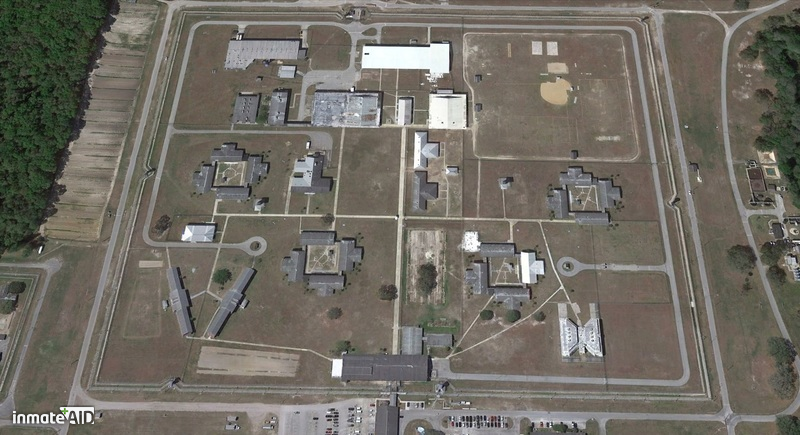
Sumter Correctional Institution (SCI) is a Florida Department of Corrections (FDC) facility at 9544 County Road 476B in Bushnell, Sumter County, one of the oldest institutions still operating in the state prison system. What makes Sumter distinctive is that it isn't really one prison — it's a compound of four separately classified FDC units sharing the same grounds, each with a different mission and custody level. This guide explains how those pieces fit together, who is held there, and the practical steps for visiting, writing, sending money, and staying in touch with someone incarcerated at Sumter.
History of Sumter Correctional Institution
Sumter CI opened in 1965, making it one of the longer-standing facilities in Florida's prison system. In 1987, the department added two more pieces to the site: the Sumter Basic Training Unit, a boot-camp-style program, and the Sumter Work Camp, a lower-custody unit for general-population inmates. A fourth component, the Sumter Annex, rounds out the compound as a close-custody unit specifically for youthful offenders.
Understanding Sumter's Four Units
Because "Sumter Correctional Institution" is sometimes used loosely to refer to the whole Bushnell compound, it helps to know the pieces are administratively distinct:
- Sumter C.I. (main institution): Male, close custody, general population. A 2025 federal facility audit listed a designated capacity of 1,617 beds across 22 housing units, with an average daily population of 1,426 — broadly consistent with our directory's baseline of roughly 1,639 beds.
- Sumter Annex: Male, close custody, specifically for youthful offenders, with a capacity in the range of 175 beds.
- Sumter Basic Training Unit: A minimum-custody boot camp for youthful offenders, capacity around 112 — see below.
- Sumter Work Camp: Male, medium custody, general population, capacity around 290 — this unit's "medium" custody designation likely corresponds to the "State – medium" security level in our directory's baseline record.
If you're trying to locate a specific person, it matters which of these four units they're actually in, since visiting rules, programming, and population can differ between them even though they share one street address.
The Basic Training Unit: Florida's Only Boot Camp
Sumter is home to FDC's only Basic Training Unit for Youthful Offenders — Florida's version of a "shock incarceration" boot camp. It's a roughly 120-day regimented program combining military-style drill instruction, structured education, and intensive physical training, aimed at younger offenders as an alternative to a longer standard sentence. Graduates of the program are typically released to probation rather than continuing to serve time in the general population. If a loved one has been assigned to this unit specifically, it's worth noting that its structure, schedule, and release process differ meaningfully from those of the main institution.
Who Is Held at Sumter Correctional Institution
Across its various units, Sumter houses male inmates only, spanning minimum custody (Basic Training Unit) through close custody (the main institution and the Annex). The main institution primarily holds general-population men serving state sentences, while the Annex is reserved for younger offenders and the Basic Training Unit serves as a short-term alternative track.
PrisonAssist.com's directory currently holds roughly 18,268 arrest and booking records associated with Sumter Correctional Institution. That figure is a historical count of records compiled in our directory over time across the Sumter compound, not a live population snapshot — actual current population is governed by each unit's bed capacity and turns over as people are released, transferred, or newly arrive.
The Annex's specific focus on youthful offenders means Sumter plays a somewhat different role than a typical close-custody institution: rather than housing a general cross-section of adult sentences, that unit is built around Florida's separate legal framework for younger people sentenced as adults, who are held apart from the older general population even at the same custody level. If a loved one is a younger offender, it's worth confirming directly which of Sumter's units — the Annex, the Basic Training Unit, or the main institution — they've actually been assigned to, since eligibility criteria differ between them.
Programs and Services
Beyond the Basic Training Unit's boot-camp program, Sumter Work Camp inmates participate in general work-squad assignments, and aggregated facility data points to educational courses, vocational training, and substance-abuse treatment programming available across the compound, alongside FDC's standard statewide offerings in adult education, chaplaincy, and general medical and mental-health services.
Because the Basic Training Unit graduates are released directly to probation rather than continuing through the standard prison system, families with a loved one in that specific track are dealing with a meaningfully shorter overall timeline than a typical Sumter sentence — roughly four months of structured programming rather than years. That compressed schedule also means visitation and communication planning can look different, since there's less time overall and the program's schedule tends to be more tightly structured around drill and education than a standard general-population unit.
How to Find an Inmate at Sumter Correctional Institution
If you believe a loved one has been transferred to Sumter — typically after sentencing and intake processing at a reception center, not immediately after arrest — search their name on PrisonAssist.com to check our records, then confirm current custody status, exact location, and which of the four Sumter units they're in with FDC's official inmate locator or by calling the facility directly at 352-569-6100.
Visitation at Sumter Correctional Institution
Regular visiting follows FDC's general statewide pattern: Saturdays and Sundays, 9:00 a.m. to 3:00 p.m. Eastern (8:00 a.m. to 2:00 p.m. Central), with registration beginning at 8:15 a.m. Eastern; visitors are generally not processed after 2:00 p.m. without duty-warden approval, and holiday visitation is available on major federal holidays. Visitors need to submit a pre-approval application (FDC Form DC6-111A) well in advance of a planned visit, as the process isn't immediate. Because Sumter's four units may have slightly different specifics, confirm current hours and requirements for the exact unit your loved one is in before making the trip.
Sending Mail to an Inmate
Florida centralizes routine inmate mail statewide: address letters using the inmate's committed name and DC#, then send them to PO Box 23608, Tampa, FL 33623, rather than to the facility's street address in Bushnell. Mail is scanned centrally and distributed electronically to the housing unit. Mail must go through USPS only and be written in English, Spanish, or Haitian Creole, absent prior approval; otherwise, the Florida Administrative Code prohibits boxes, padded envelopes, plastic bags, multi-layer or reinforced packaging, metal fasteners, bubble wrap, and packing peanuts. Our letter-writing service formats, prints, and mails letters and photos so they're built to clear inspection the first time.
Sending Money and Commissary
Sumter's deposit system runs through JPay, FDC's statewide vendor for inmate deposits and commissary funds. Families can fund an inmate's account online at jpay.com or via the JPay app using a credit or debit card. As with other FDC facilities, anyone sending funds generally needs to be on the inmate's approved contact list first.
Phone Calls
FDC's statewide inmate telephone contract is held by Securus Technologies, with a prepaid or collect rate historically around $0.14 per minute. Confirm the currently active vendor and rate directly with the facility before setting up a calling account, since contracts can be rebid over time.
A Note on Facility History
Sumter's history includes a serious documented incident from 2013, when a 17-year-old inmate was violently assaulted by a group of other inmates in what was described as an initiation-style attack, while a corrections officer allegedly failed to intervene. The Southern Poverty Law Center filed a federal lawsuit on the teenager's behalf in 2016, which was settled in 2017. Families researching Sumter should know that this history is part of the public record, alongside the more recent 2025 federal facility audit, which documents current population and staffing figures at the main institution. As with any facility, if you have specific safety concerns about a loved one incarcerated at Sumter, raising them directly with classification staff is the most effective first step.
Release and Life After Sumter
It's worth being direct about something families sometimes ask: bail does not apply once someone is incarcerated at Sumter Correctional Institution. Bail is a pretrial tool used to secure release from county jail while a case is still pending. By the time someone is transferred to an FDC state prison like Sumter, they have already been convicted and sentenced, so release instead comes from completing the sentence, earning statutory gain time for good behavior and program participation, successfully completing the Basic Training Unit's boot-camp program where applicable, or, in limited cases involving older pre-1983 offenses, parole eligibility. If bail is still relevant to your family's situation, that generally means the person is still in county jail awaiting trial or sentencing rather than at Sumter — our bail bonds service is built for that earlier stage. What families of someone already at Sumter can do is stay connected by writing letters, sending photos, shipping an approved care package, keeping commissary funds through JPay, and setting up affordable phone service.
On the gain time question specifically, Florida operates under what's commonly called the "85% law": for most felony offenses committed since 1995, state law requires an inmate to serve at least 85% of their imposed sentence regardless of gain time earned. On that floor, FDC can award basic gain time for inmates who follow institutional rules, and, separately, incentive gain time for completing education, vocational, or substance-abuse programs at the main institution or Work Camp. The Basic Training Unit operates differently: successful graduates are released to probation upon completion of the roughly 120-day program, rather than having their time accumulated against a longer sentence. Either way, this isn't discretionary parole; it's time credited for documented good behavior and program completion, and it can be reduced or forfeited for serious disciplinary infractions.
Incarceration in Florida: The Bigger Picture
Florida's overall imprisonment rate runs around 371 people per 100,000 residents, with a total state prison population near 81,027 and a county jail population near 56,660 statewide. Sumter's four-unit compound, spanning boot camp through close custody, is a distinctive slice of that broader system, illustrating how Florida uses a single site to run very different kinds of programming side by side.