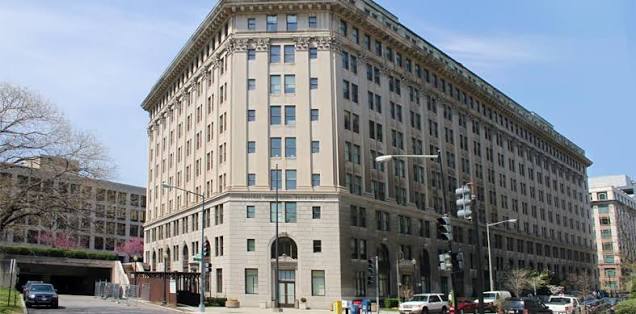

The Federal Bureau of Prisons (BOP) Central Office, located at 320 First Street NW, Washington, DC 20534, is the administrative nerve center of the largest prison system in the world. From this address, the BOP Director and more than a dozen divisions oversee 122 federal correctional facilities, approximately 154,000 federal inmates, and roughly 34,700 staff members spread across every region of the United States. For families of inmates — particularly those with loved ones caught in the transit system or held as DC Code offenders — understanding how the BOP Central Office works, what it controls, and how to navigate it is the starting point for every other step.
The History of the Federal Bureau of Prisons
The Federal Bureau of Prisons was formally established on May 14, 1930, by act of Congress within the U.S. Department of Justice, charged with the "management and regulation of all Federal penal and correctional institutions." Before its creation, federal prisoners were housed haphazardly across state institutions and a handful of federal facilities with no centralized standards, oversight, or training.
The earliest precursor to the federal prison system dates to the Three Prisons Act of 1891, which created USP Leavenworth (Kansas), USP Atlanta (Georgia), and McNeil Island (Washington). For four decades, these institutions operated independently and without unified leadership — a chaotic arrangement that grew untenable as federal law enforcement expanded in the early twentieth century.
Sanford Bates, recruited by Assistant Attorney General Mabel Walker Willebrandt, became the BOP's first Director in 1930. Bates transformed federal corrections: he centralized administration, eliminated political patronage in hiring, launched a construction program to alleviate severe overcrowding, improved staff training, and established the prison industries program, which would eventually become UNICOR. By the end of 1930, BOP managed 14,115 inmates in 14 institutions. By 1940, those numbers had nearly doubled to 24,360 inmates in 24 institutions.
Key milestones in BOP's history include:
- 1932: USP Lewisburg opened — the first penitentiary constructed entirely by BOP, introducing modern security-level housing concepts.
- 1934: USP Alcatraz opened as the nation's first maximum-security federal penitentiary. Congress also established Federal Prison Industries (later UNICOR) on June 23, 1934 — the largest inmate job-training program in the country.
- 1937–1964: James V. Bennett, the longest-tenured director in BOP history, advanced inmate classification systems and expanded educational and vocational programming.
- 1984: The Comprehensive Crime Control Act dramatically expanded the federal inmate population through mandatory minimum sentences and structured sentencing guidelines — beginning a three-decade population surge.
- 1992: Kathleen Hawk Sawyer became the first female Director of the BOP, leading the agency through 1992–2003 and later returning as the 10th Director to oversee First Step Act implementation. She introduced the agency's first formal vision statement and the LEAD leadership development program.
- 2018: President Trump signed the First Step Act on December 18 — the most significant federal criminal justice reform in a generation, creating earned time credits, risk assessment tools, and sentencing reforms that have since released more than 18,000 individuals early.
- 2024: Congress enacted the Federal Prison Oversight Act, signed by President Biden on July 25, 2024 — giving the DOJ Inspector General independent authority to conduct comprehensive inspections of all 122 BOP facilities and establishing an independent ombudsman office for inmate complaints.
- 2025: William K. Marshall III was sworn in as the 13th Director on April 21, 2025. On July 4, 2025, the One Big Beautiful Bill Act granted BOP $5 billion in supplemental funding — $3 billion for staffing and training, $2 billion for infrastructure repairs — acknowledging a documented $3 billion maintenance backlog.
The BOP's inmate population peaked at 214,149 in 2014 and has since declined to approximately 154,093 — the result of sentencing reform, COVID-19 emergency releases, and First Step Act early releases.
BOP Central Office: Organization and Divisions
The Central Office at 320 First St NW does not house inmates — it is the headquarters that manages the entire federal prison system through six regional offices and 122 facilities. The Director reports to the U.S. Attorney General and is assisted by a Deputy Director, Associate Deputy Director, and Chief of Staff.
The six BOP regional offices and their geographic jurisdictions are:
- Mid-Atlantic Regional Office — Delaware, Kentucky, Maryland, North Carolina, Tennessee, Virginia, West Virginia
- North Central Regional Office — Colorado, Illinois, Indiana, Iowa, Kansas, Michigan, Minnesota, Missouri, Nebraska, North Dakota, South Dakota, Wisconsin
- Northeast Regional Office — Connecticut, New Hampshire, New Jersey, New York, Maine, Massachusetts, Ohio, Pennsylvania, Rhode Island, Vermont
- South Central Regional Office — Arkansas, Louisiana, New Mexico, Oklahoma, Texas
- Southeast Regional Office — Alabama, Florida, Georgia, Puerto Rico, Mississippi, South Carolina
- Western Regional Office — Alaska, Arizona, California, Idaho, Hawaii, Montana, Nevada, Oregon, Utah, Washington, Wyoming
Key divisions operating out of the Central Office include:
- Correctional Programs Division — provides national policy direction and daily operational oversight for classification, discipline, counter-terrorism measures, and case management across all facilities.
- Health Services Division — oversees medical, dental, and psychiatric services system-wide. The DOJ OIG has repeatedly identified this division as a persistent area of concern, citing delays in care and vacancy rates among medical professionals, with more than 3,000 positions vacant.
- Human Resource Management Division — manages hiring, pay, training, and personnel administration. All BOP law enforcement personnel complete 200 hours of formal training annually plus 120 hours at the Federal Law Enforcement Training Center (FLETC).
- Administration Division — manages budget, finance, procurement, property, and facility construction. The division oversees execution of the agency's $9+ billion annual budget.
- Office of General Counsel — provides litigation support and legal advice through 6 regional and 24 local legal centers; handles inmate administrative remedy appeals, labor relations, and regulatory matters.
- Reentry Services Division — develops programming to advance inmate reentry needs and manages the Residential Reentry Center (RRC/halfway house) contract program across 159 facilities nationwide.
- National Institute of Corrections (NIC) — provides training and technical assistance to federal, state, and local correctional agencies. Serves as BOP's educational consulting arm for the broader corrections profession.
- UNICOR / Federal Prison Industries — established June 23, 1934; UNICOR adopted its trade name in 1977. It operates factories inside federal prisons across six business segments: agribusiness, clothing and textiles, electronics, office furniture, recycling, and services. UNICOR is self-sustaining — no congressional appropriations — with FY2023 net sales of $389 million. Approximately 14,000–15,000 inmates work in UNICOR programs, earning wages of $0.23–$1.15 per hour and gaining job skills for reentry.
DC Code Offenders: How Washington, DC Residents End Up in Federal Prison
One of the most misunderstood aspects of Washington, DC's criminal justice system is why DC residents convicted under local law end up in federal prison rather than a local jail or state correctional system. The answer lies in a 1997 act of Congress.
The National Capital Revitalization Act of 1997
The National Capital Revitalization and Self-Government Improvement Act of 1997 (Public Law 105-33, enacted August 5, 1997) fundamentally restructured DC's corrections system. The primary driver: the Lorton Correctional Complex in Virginia, which housed DC felony offenders, was dramatically overcrowded — holding approximately 7,300 inmates at 44% over capacity by the mid-1990s, with chronic violence and deteriorating infrastructure.
The Act's key corrections provision: close Lorton and transfer all DC felony offenders — those with sentences exceeding one year — into federal Bureau of Prisons custody, even though these individuals were convicted under local DC law, not federal law. This makes DC residents uniquely subject to federal prison placement despite committing local offenses. The last prisoners were removed from Lorton in late 2001.
At transfer, approximately 6,082–6,500 DC Code offenders entered BOP custody, representing roughly 4% of the federal prison population at the time. As of December 2023, approximately 3,200 DC Code offenders remain in BOP custody — reflecting releases and natural population churn over 25 years.
The Distance Problem
The Revitalization Act directed BOP to house DC Code offenders within 500 miles of DC "to the extent practicable." This directive has been systematically unmet:
- The average distance between DC and a DC Code offender's BOP facility is 818 miles — more than 60% above the statutory threshold (DC Policy Center data).
- The unweighted average facility distance is 1,400 miles.
- More than 45% of DC Code offenders are housed beyond the 500-mile mark.
- For comparison: the national average distance between an incarcerated male and his home is 100 miles. DC Code offenders are typically imprisoned more than 8 times farther from home than the national norm.
BOP has distributed DC Code offenders across 115 facilities in 33 states. The largest concentrations are in West Virginia, Pennsylvania, North Carolina, Virginia, and Kentucky — but substantial numbers are in facilities as far as California, Hawaii, and Puerto Rico.
Congresswoman Eleanor Holmes Norton, DC's non-voting delegate in Congress, has been the most persistent voice on this issue. She successfully secured inclusion of DC Code offenders in the First Step Act's placement provision (December 2018), which requires BOP to place any federal prisoner "as close as practicable" to their home within 500 driving miles. In April 2025, Norton introduced legislation to tighten that standard to 250 miles.
Previously, BOP contracted with the GEO Group to operate Rivers Correctional Institution in Hertford County, North Carolina — a dedicated facility for DC Code offenders that opened in 2001. The BOP contract expired on March 31, 2021, and was not renewed.
DC DOC Prisoner Transportation: The DOC–USMS Agreement
For DC inmates scheduled for appearances at DC Superior Court, prisoner transportation is handled under a formal Intergovernmental Agreement (IGA) between the DC Department of Corrections and the United States Marshals Service (USMS). Under this agreement, primary transportation responsibility shifted from the USMS to the DOC — meaning DC correctional officers, not federal marshals, now handle the daily movement of inmates between detention facilities and the courthouse.
Transportation under this agreement covers all key DC detention facilities:
- Central Detention Facility (DC Jail) — D Street SE, the main DC jail
- Correctional Treatment Facility (CTF) — adjacent to the DC Jail, privately operated
- St. Elizabeths Hospital – John Howard Pavilion — housing defendants remanded for psychiatric evaluation or treatment
- Other local detention facilities holding DOC prisoners in the Washington, DC area
The DC DOC also handles emergency medical hospital runs for inmates in its custody — meaning transport to outside medical appointments and emergency care is coordinated through the DOC transportation division rather than law enforcement agencies. The rationale: by shifting routine court transport to DOC correctional officers, the USMS can commit more deputies to courthouse security and fugitive apprehension operations.
The First Step Act: Sentence Reductions and Earned Time Credits
President Trump signed the First Step Act (Public Law 115-391) on December 18, 2018 — the most consequential federal criminal justice reform legislation in a generation. Its provisions affect every federal inmate, including DC Code offenders.
Earned Time Credits (ETCs)
Under the First Step Act, eligible inmates earn credits toward early release by completing approved programming:
- 10 days of credit per 30 days of successfully completed programming or productive activity
- 15 days of credit per 30 days for inmates classified as minimum or low risk for two consecutive PATTERN assessments
- Credits apply toward early transfer to a Residential Reentry Center, home confinement, or supervised release
As of January 2024, BOP recorded 443,569 total program completions under the First Step Act — an increase of more than 200,000 since October 2022. In calendar year 2024, 18,084 individuals were released from BOP custody after earning and applying time credits. Cumulatively, 129,616 individuals have been transferred to RRCs or home confinement due to earned credits. Among nearly 30,000 people whose release was expedited, nearly 9 in 10 have not been rearrested or reincarcerated — a 12% recidivism rate.
Good Conduct Time
The First Step Act clarified that federal inmates can earn up to 54 days of good conduct time per year of sentence imposed (not per year served) — a significant expansion that benefited thousands of long-sentenced inmates retroactively.
PATTERN Risk Assessment
The First Step Act required BOP to develop a risk and needs assessment tool — the PATTERN (Prisoner Assessment Tool Targeting Estimated Risk and Needs), currently in version 1.3. PATTERN uses 15 variables across four tools (general and violent recidivism, male and female) to classify each inmate's recidivism risk. Risk level directly determines how many time credits an inmate can earn and whether those credits can be applied toward early release. Approximately 25–35% of inmates have achieved a lower risk designation at their most recent assessment compared with their first assessment, demonstrating that programming meaningfully reduces measured risk.
RDAP: Residential Drug Abuse Program
RDAP is an intensive nine-month, 500-hour substance use disorder treatment program offered at 60+ BOP locations. Upon successful completion, eligible inmates may receive up to 12 months off their sentence, plus up to 6 months in a halfway house. Annual enrollment runs 14,000–15,000 inmates. Recidivism data: fewer than half of RDAP completers (48.2%) recidivated in an eight-year follow-up study, compared to 68.0% of eligible non-participants — a dramatic difference that makes RDAP participation among the most impactful decisions an inmate can make.
BOP Staffing Crisis and Oversight
The BOP has operated under a severe and well-documented staffing crisis for years. Key figures from current oversight reports:
- 9,500+ correctional officer vacancies across the system (DOJ OIG estimate)
- 3,000+ medical professional vacancies — nurses, physicians, dentists, psychiatrists
- $437.5 million in correctional officer overtime costs in FY2024 alone
- $58.4 million in additional "augmentation" — pulling teachers, counselors, and medical personnel into security roles
- Nearly 9 million overtime hours logged by correctional officers in FY2024 — a 43% net increase since 2021
- Approximately 1 officer per 12.5 prisoners — a ratio that leads to diminished programming, reduced inmate movement, and heightened tensions
The DOJ OIG has identified the BOP as one of the Department's most persistent management challenges, with documented failures in healthcare provision, contraband interdiction, sexual abuse prevention, and security camera coverage.
The Federal Prison Oversight Act, signed July 25, 2024, passed the House 392-2 and the Senate unanimously — a rare bipartisan achievement. The law grants the DOJ Inspector General authority to conduct comprehensive, risk-based inspections of all 122 BOP facilities using a 12-factor risk scoring system. Facilities must receive corrective action plans within 60 days of each inspection. An independent ombudsman office and secure complaint hotline were established to protect the identities of inmates and staff who report problems.
DC Reentry Crisis: The Halfway House Gap
For DC Code offenders completing their federal sentence, the reentry situation is particularly acute. The last DC-area halfway house, Hope Village, closed in April 2020 due to documented unsafe conditions and inadequate services. As of 2025, no functioning Residential Reentry Center operates within Washington, DC proper for returning DC Code offenders.
A planned 300-bed RRC facility — awarded to CORE DC in 2018 — remains unbuilt after six years of delays due to sustained community opposition over its ward placement. No confirmed opening date has been established.
In the meantime, DC Code offenders released from federal prison to halfway house placement are primarily sent to Baltimore — specifically the Volunteers of America Chesapeake facility. As of May 2024, 58 DC Code offenders resided there, with 96% identifying as Black. Residents report 1.5-hour one-way commutes to reach DC-area employment, missing facility dinners and programming upon their return. The DC Office on Reentry and Citizen Affairs confirmed to the DC Council in May 2024: "most men are being sent to Baltimore upon release."
The DC Corrections Information Council (CIC) monitors conditions at BOP facilities holding DC Code offenders and at RRCs serving DC residents, publishing inspection reports accessible through the DC government website.
How to Find a Federal Inmate
The BOP's Inmate Locator at www.bop.gov/inmateloc/ is the primary tool for locating anyone in federal custody, including DC Code offenders. The tool covers records from 1982 to the present and can be searched by name or by BOP register number (a unique 8-digit identifier assigned at intake that never changes).
The locator displays:
- Current facility location
- Age, race, and sex
- Projected release date (note: due to First Step Act sentence recalculations, displayed dates may lag)
When a locator result shows "IN TRANSIT," the inmate is actively being moved between facilities and their precise location cannot be disclosed. Check the locator daily — it updates within 24–72 hours of the inmate's arrival and check-in at their destination facility. For DC DOC inmates specifically, IN TRANSIT often indicates a court run to DC Superior Court under the DC DOC–USMS Intergovernmental Agreement.
Communicating with Federal Inmates
Email — TRULINCS / CorrLinks
BOP's Trust Fund Limited Inmate Computer System (TRULINCS) allows electronic messaging between inmates and approved external contacts through the CorrLinks platform (www.corrlinks.com). The system is available at all BOP-operated facilities (not contract facilities). Cost to inmates: 5 cents per minute for composing and reading messages — funded entirely by the Inmate Trust Fund, not taxpayer appropriations. Messages are text-only, limited to 13,000 characters, and are monitored. To begin: the inmate adds you to their approved contact list, staff approves, and CorrLinks sends an automated invitation email to you.
Phone Calls — ViaPath (formerly GTL)
BOP phone services are provided by ViaPath Technologies (formerly Global Tel Link / GTL) under contract. Calls are limited to 15 minutes each, with a 30-minute wait between calls, and a cap of 300 minutes per month. All calls are recorded and monitored except properly designated legal calls. The inmate funds calls through their commissary account.
Send all mail to the inmate's name, BOP register number, and the facility's mailing address. All non-legal mail is opened and inspected. Legal mail (from attorneys) must be labeled "Special Mail — Open Only in the Presence of the Inmate." Do not send mail during an IN TRANSIT period — hold until the new facility is confirmed.
Visitation
Approved visitors may visit federal inmates on the facility's established visiting schedule. The BOP allows at least four hours of visiting time per month. The approval process requires submitting a Visitor Information Form to the facility's case manager; approval typically takes several weeks. Dress code restrictions apply — no clothing resembling inmate uniforms, no revealing attire. For DC Code offenders housed hundreds or thousands of miles from DC, visitation is a practical burden that advocacy groups have documented as a significant harm to family bonds and reentry outcomes.
Sending Money to Federal Inmates
Commissary funds for federal inmates can be deposited through three BOP-approved methods:
- MoneyGram: Funds post within 2–4 hours (7 AM–9 PM EST); maximum $300 per online transaction.
- Western Union: Same posting window; available online, by phone, or in person.
- USPS Money Order: Mail to the BOP's designated processing address. Allow several business days for processing.
All methods require the inmate's 8-digit BOP register number and last name (no spaces). Questions about deposits: call 202-307-2712 (8 AM–4:30 PM ET).
BOP's Current Population: Demographics and Offense Types
Understanding who is housed in the federal system helps families contextualize their loved one's experience. As of December 2024, BOP's population of approximately 154,093 breaks down as follows:
- Race: 56.7% White, 38.9% Black, 2.9% Native American, 1.5% Asian
- Sex: 93.5% male, 6.5% female (housed in 27–28 facilities)
- Ethnicity: 29.2% identify as Hispanic
- Age: 74.5% between ages 26–50
- Offense: Approximately 46% incarcerated for drug offenses; significant numbers for weapons, immigration, and fraud
- Veterans: 8,202 veterans (over 5% of the population)
- Non-U.S. citizens: 21,948 (down from 22,817 in 2023)
- Death row: 3 individuals as of December 2024 (following President Biden's December 23, 2024 commutations)
The racial disparity is pronounced for DC Code offenders specifically: the DC Corrections Information Council has documented that the overwhelming majority of DC Code offenders in BOP facilities and in DC-area halfway houses identify as Black — a reflection of decades of racially disparate policing and prosecution in Washington, DC. The DC Attorney General has formally opposed what the office described as "discriminatory and unequal treatment of DC inmates by the Federal Bureau of Prisons."
Inmate Rights and the Administrative Remedy Process
Federal inmates have a formal mechanism for raising grievances about conditions, treatment, or decisions affecting their custody. The Administrative Remedy Process — established during Norman Carlson's tenure (1970–1987) — requires inmates to exhaust internal remedies before filing suit in federal court. The four-step process:
- Informal Resolution: The inmate attempts to resolve the issue informally with staff (BP-8 form).
- Formal Remedy Request: If unresolved, the inmate files a formal BP-9 request with the Warden.
- Regional Appeal: If the Warden's response is unsatisfactory, the inmate files a BP-10 appeal to the BOP Regional Director.
- Central Office Appeal: Final internal appeal (BP-11) to the BOP General Counsel at the Central Office in Washington, DC.
Only after exhausting all four steps can an inmate file a civil rights lawsuit in federal court. The Administrative Remedy Process generated hundreds of thousands of submissions per year system-wide; processing delays are a documented concern for the OIG. Under the Federal Prison Oversight Act of 2024, the newly created independent ombudsman office provides an additional avenue for inmates to raise complaints, with identity protection.
BOP Programs Beyond RDAP
While RDAP is the flagship program for sentence reduction, BOP operates a broad portfolio of programming across its facilities. Participation in BOP programs affects PATTERN risk scores, ETC accumulation, and reentry outcomes:
- GED and Literacy Programs: Federal law (18 U.S.C. § 3624) requires BOP to provide literacy programs and mandates that inmates without a high school diploma or GED participate in literacy programs for a minimum of 240 hours, or until they obtain their GED.
- Vocational Training: BOP operates vocational training programs in fields including building trades, culinary arts, auto mechanics, horticulture, and information technology — in partnership with UNICOR and community colleges.
- Occupational Education: BOP's occupational education programs award industry-recognized credentials. Many facilities partner with local community colleges to offer college credit.
- Non-Residential Drug Abuse Program (NRDAP): For inmates who do not qualify for or cannot be placed in RDAP, the NRDAP provides shorter-duration substance use programming.
- Mental Health Treatment: BOP facilities provide individual therapy, group programming, and residential mental health treatment units. An estimated 20–25% of BOP inmates have a serious mental illness — a population the OIG has repeatedly identified as underserved.
- Release Preparation Program (RPP): An evidence-based curriculum required for all inmates, covering employment readiness, financial literacy, health and wellness, cognitive skills, and legal issues. RPP must be completed before RRC placement.
- Reentry Programs: Mock job interviews, résumé workshops, housing navigation assistance, and benefits eligibility counseling (Social Security, Medicaid, veterans benefits) delivered in the final months before release.
Resources for Families and Returning Citizens
- BOP Inmate Locator: www.bop.gov/inmateloc/
- BOP Central Office: 320 First St NW, Washington, DC 20534 | Phone: 202-307-3198 | www.bop.gov
- CorrLinks (TRULINCS email): www.corrlinks.com
- Money Deposits Hotline: 202-307-2712 (8 AM–4:30 PM ET)
- DC Corrections Information Council (CIC): Monitors BOP facilities housing DC Code offenders — cic.dc.gov
- DC Office on Reentry and Citizen Affairs (ORCA): DC government reentry coordination — reentry.dc.gov
- DC Justice Lab: Law and policy advocacy for DC's criminal legal system — dcjusticelab.org
- FAMM (Families Against Mandatory Minimums): famm.org — federal sentencing reform advocacy and family resources
- Washington Lawyers' Committee for Civil Rights and Urban Affairs: Provides prisoners' rights legal services for DC-area inmates
- Federal Public Defender — DC District: Contact via the U.S. District Court for the District of Columbia
- PrisonAssist.com: Inmate search, letter service, care packages, discounted phone minutes for federal inmates
Inmate service providers at Federal Bureau of Prisons Central Office (Federal)
Like most US jails and prisons, Federal Bureau of Prisons Central Office (Federal) relies on private companies for phone calls, video visits, money transfers, and care packages, each with its own fees and sign-up steps. Nationwide the most common providers are Securus and ViaPath (GTL) for calls and video, JPay and Access Corrections for sending money, and Access Securepak for care packages.
Not sure which company serves the Federal Bureau of Prisons Central Office (Federal)? Our inmate service provider directory explains how each one works, what it charges, and how to set up an account before you pay.