

The Iowa Department of Corrections (IA DOC) is the state agency responsible for managing Iowa's adult correctional institutions. Its administrative headquarters is located at 510 East 12th Street in Des Moines, Iowa 50319 — the state capital. This office is a central policy and management hub, not a facility that holds inmates. Incarcerated individuals under IA DOC jurisdiction are housed at individual state prisons and correctional facilities distributed across Iowa, all operated by the department.
Our directory holds over 11,400 historical arrest and booking records linked to Iowa facilities — a cumulative historical count, not a current population figure. IA DOC headquarters can be reached at 515-725-5701, and the department's website and offender search are available at www.doc.state.ia.us.
About the Iowa Department of Corrections
IA DOC was established in its current form in 1983, consolidating Iowa's fragmented correctional administration into a unified state agency. The department operates nine adult correctional institutions, a forensic psychiatric hospital, a women's facility, and a network of Community Based Corrections (CBC) offices that manage probation, parole, work release, and residential programs across the state's eight judicial districts.
Iowa's prison population has consistently run over capacity. As of June 17, 2026, IA DOC reported a total institutional population of 8,928 inmates against a system capacity of 6,990 — approximately 28% over capacity. This overcrowding is a structural challenge that the department has managed through a combination of facility utilization strategies and community-based supervision alternatives.
Iowa's Correctional Facilities
IA DOC operates the following major institutions:
- Iowa State Penitentiary (Fort Madison): Iowa's maximum-security facility and oldest active prison, housing adult males. Renovation of this facility is part of the state's current expansion plans.
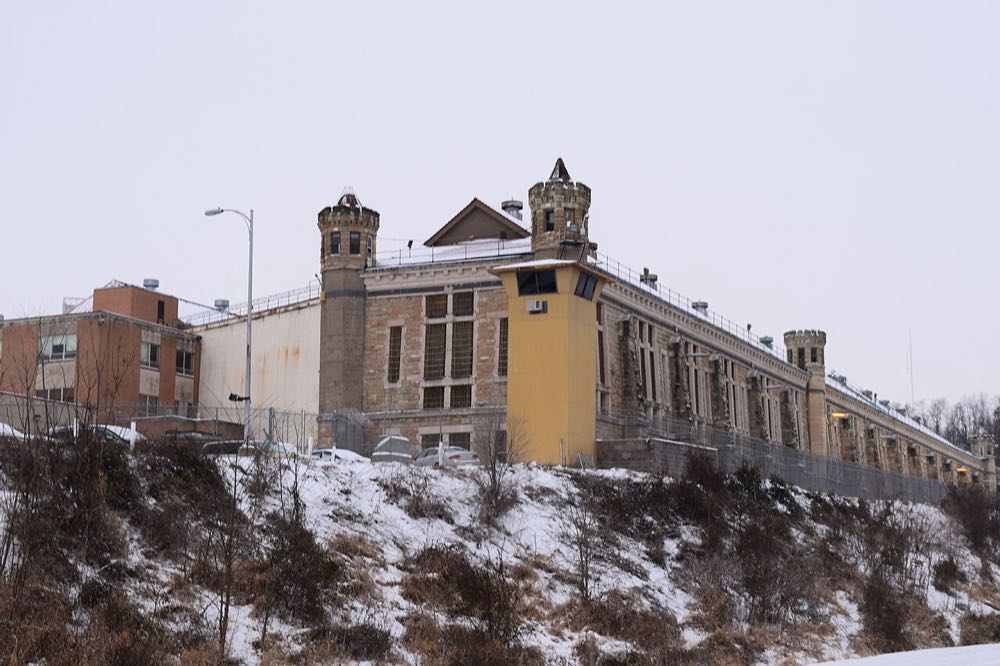
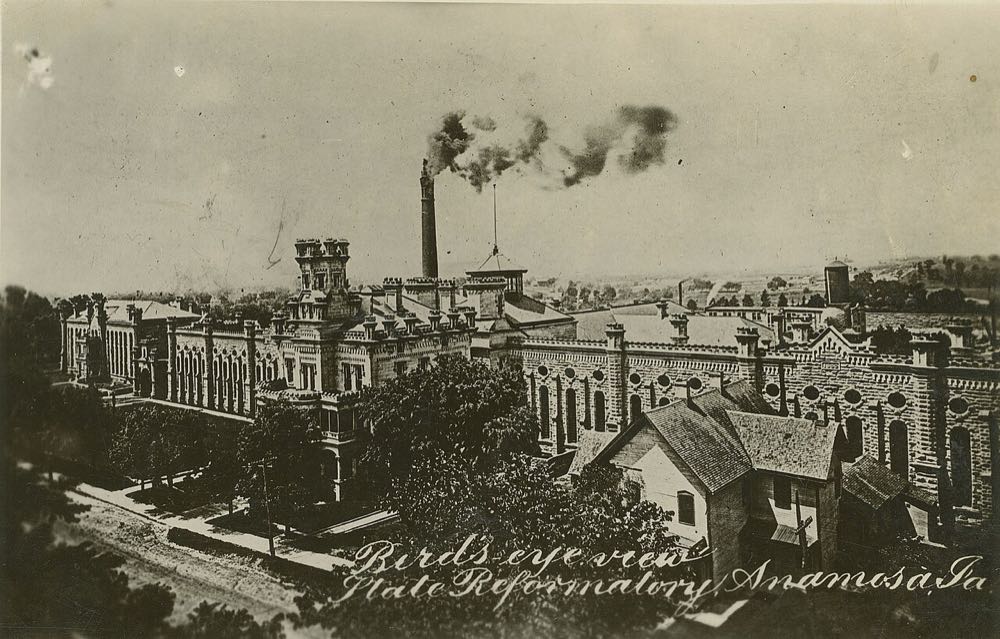
- Anamosa State Penitentiary (Anamosa): A medium-security facility for adult males (current count: 1,286 vs. capacity 908).
- Iowa Correctional Institution for Women (Mitchellville): The state's primary women's facility, housing women at multiple security levels (current count: 725).
- Newton Correctional Facility (Newton): Medium and minimum-security levels; renovation planned as part of the expansion initiative (current count: ~1,300 across units).
- Oakdale — Iowa Medical and Classification Center (Coralville): Serves as the reception and classification center for Iowa's correctional system and provides medical and mental health treatment (current count: 950 vs. capacity 585).
- Fort Dodge Correctional Facility (Fort Dodge): Medium-security for adult males (current population: 1,295 vs. capacity 1,162).
- Mount Pleasant Correctional Facility (Mount Pleasant): Medium-security (current count: 1,033 vs. capacity 776).
- Clarinda Correctional Facility (Clarinda): Medium-security (current count: 1,030 vs. capacity 750).
- Rockwell City Correctional Facility (Rockwell City): Minimum security (current count: 486 vs. capacity 245 — nearly double capacity).
Iowa's Major Prison Expansion: A System in Transition
Iowa's correctional system is on the verge of a historic expansion that will significantly reshape the state's incarceration landscape. In June 2026, Governor Kim Reynolds signed a new "three strikes" habitual offender law that requires a mandatory minimum seven-year prison sentence before parole eligibility for anyone convicted of a third felony offense — up from the previous three-year minimum. The law uses a point system: a person accumulates 3 points for certain felony convictions, triggering the mandatory minimum.
The Iowa DOC projects this new law will increase the state's prison population by nearly 50% over the next three years — from roughly 8,900 today to potentially over 13,000 by fiscal year 2030. To accommodate this growth, the department has announced plans to:
- Build three new medium-security prisons at an estimated construction cost approaching $2 billion
- Renovate the Iowa State Penitentiary in Fort Madison and the Newton Correctional Facility
- Hire approximately 962 new employees to staff expanded facilities
- Increase annual operating costs by an estimated $115 million
This expansion will take five to seven years to complete. In the interim, the existing overcrowded system will continue operating above capacity. For families, this means the system will remain under significant strain — with impacts on programming availability, transfer frequency, and visitation scheduling during this period of growth.
How to Locate an Inmate in Iowa
To find someone in Iowa's state prison system:
- PrisonAssist.com: Search by name to check our directory for Iowa facility records.
- IA DOC Offender Search: Available on the IA DOC website (www.doc.state.ia.us), this tool allows searches by name and DOC number. The DOC also publishes daily population statistics at doc-search.iowa.gov/dailystatistics, showing current counts and capacities for each institution.
- Phone: Call IA DOC headquarters at 515-725-5701 for direction to the appropriate facility.
People recently arrested who have not yet been sentenced will be in county jail custody — Iowa counties operate their own pretrial detention facilities. Contact the relevant county sheriff's office for pretrial booking information. State prison intake follows sentencing, with classification typically occurring at the Iowa Medical and Classification Center (IMCC) in Coralville.
Reception and Classification at Iowa IMCC
Newly sentenced Iowa state prisoners typically transfer first to the Iowa Medical and Classification Center (IMCC) in Coralville for intake processing, medical and mental health evaluation, and classification. Classification determines the appropriate security level and facility assignment. The process takes several weeks. During reception, mail and visiting rules follow IMCC's specific policies. Once classified and transferred to a permanent facility, families should update mail addresses and confirm the new facility's visiting procedures.
Visitation at Iowa Correctional Facilities
Iowa DOC facilities support visitation as part of the agency's rehabilitation mission. General requirements across the system:
- Visitor registration: Visitors must be on the inmate's approved visiting list. The registration process involves the inmate submitting a request that is reviewed by facility staff. Start this process early — approval can take several weeks, particularly during periods of high administrative demand.
- Photo ID: Valid government-issued photo ID is required at all facilities. Driver's licenses, state IDs, and passports are standard. Expired IDs will not be accepted.
- Visiting schedule: Days and hours vary by facility. Check the specific institution's page on the DOC website and confirm directly with the facility before traveling — schedules can change due to lockdowns, holidays, and staffing needs.
- Dress code: Strict dress codes apply. Colors and styles associated with inmate clothing are prohibited, as are revealing items and clothing with inappropriate content. Verify the specific facility's rules before your visit.
- Contact vs. non-contact: Most Iowa DOC facilities offer contact visiting for approved visitors of general population inmates. Maximum-security classifications or disciplinary status may restrict visits to non-contact format through a partition.
Sending Mail to Iowa State Prisons
For mail to reach an IA DOC inmate:
- Address envelopes with the inmate's full committed name, their DOC number, and the complete mailing address of the specific facility where they are housed. If the person is transferred, update the address immediately — mail sent to the wrong facility will be delayed or returned.
- Use plain white envelopes in standard sizes. Padded mailers, colored envelopes, and envelopes with metallic or patterned interiors are typically rejected.
- Write on plain white paper; avoid stickers, adhesive items, and colored paper.
- Photographs are generally permitted within facility-specific limits — confirm current rules for the specific institution.
- Books and publications must generally be sent directly to the facility from publishers or approved vendors.
Our letter service formats, prints, and mails letters that comply with Iowa DOC mail rules, giving your correspondence the best chance of reaching your loved one without delays from mailroom rejections.
Phone Calls from Iowa State Prisons
Phone calls from Iowa correctional facilities are placed through contracted telephone carriers. Inmates add approved numbers to their call lists through the carrier system. Family members can fund prepaid accounts for more economical rates. All calls are recorded and monitored except attorney-client calls.
Iowa's CBC (Community Based Corrections) residential programs — including work release — use the same carrier platforms but may have different call schedules. Our discounted phone call service reduces per-minute rates, making regular contact affordable regardless of which IA DOC institution your loved one is housed at.
Commissary Deposits and Care Packages
Iowa DOC inmates access commissary through their facility's inmate store. To deposit funds, the DOC uses contracted money transfer platforms — JPay is commonly accepted. Check the specific facility's information on the DOC website for current accepted methods. Allow one to two business days for funds to post.
Care packages for Iowa state prison facilities must be ordered through vendors approved by the specific institution. Confirm the approved vendor list and permitted items before placing any order — non-approved packages will be refused at intake.
Community Based Corrections (CBC): Work Release and Residential Programs
Iowa's Community-Based Corrections system is one of the most developed in the country, with eight judicial district departments operating residential programs — including work-release facilities, OWI (Operating While Intoxicated) continuum programs, and probation residential centers — across the state. As of June 2026, approximately 337 individuals are in work release programs, 556 in probation residential programs, and over 28,000 on probation or parole in the community.
If your loved one is in a CBC residential program rather than a state prison, contact the specific district's CBC department for visiting, mail, and commissary information — CBC programs operate with different rules than prison institutions.
Bail in Iowa
Bail in Iowa is set at the initial appearance before an Iowa district court judge or magistrate, typically within 24 hours of arrest. Iowa courts use a structured bail schedule for many offenses, and risk assessment tools inform pretrial release decisions. A licensed Iowa bail bondsman can post a surety bond for roughly 10% of the bail amount — nonrefundable. Iowa also has significant pretrial release programs that allow release on conditions rather than cash bail for lower-risk defendants. Once someone is sentenced and transferred to IA DOC custody, bail is no longer applicable.
Parole and Reentry in Iowa
The Iowa Board of Parole reviews cases for discretionary parole release. Iowa uses an evidence-based risk assessment approach for parole decisions. Under the new three-strikes law, third-felony offenders must serve at least 7 years before becoming eligible for parole — a significant change from the previous 3-year minimum that will affect the system for decades. For those eligible for parole, factors considered include institutional behavior, program participation, available housing and employment, and victim impact.
Iowa's CBC system provides a structured supervision framework after release, with parole agents supervising over 4,500 individuals on active parole statewide as of mid-2026. Maintaining family connections throughout incarceration is among the strongest predictors of successful parole completion and long-term stability after release.
Iowa's Incarceration Context
Iowa's imprisonment rate of approximately 262 per 100,000 residents has historically been below the national average. Still, the new habitual offender law signed in June 2026 is projected to push that rate significantly higher in the coming years. The state's prison system is already operating at 28% over capacity, and the planned expansion — three new prisons, two renovations, nearly $2 billion in construction, and nearly 1,000 new staff positions — represents an unprecedented investment in incarceration infrastructure that will reshape Iowa corrections for a generation. For families navigating the current system, the practical reality is an overcrowded network where programming and transfer management are ongoing challenges.
Legal Aid and Advocacy in Iowa
Iowa Legal Aid provides civil legal assistance for low-income Iowans, including help with family law, housing, and benefits issues that arise during or after incarceration. The Iowa Public Defender's office handles criminal defense representation for those who cannot afford private counsel. The ACLU of Iowa maintains a civil rights docket that includes issues related to prison conditions. If you have concerns about the adequacy of medical care, conditions of confinement, or the disciplinary procedures applied to a loved one in IA DOC custody, documenting your concerns in writing and contacting these organizations is an appropriate first step. The Iowa DOC Inspector General's office also receives formal complaints about facility conditions and staff conduct.
Staying Connected During Iowa's System Expansion
With the prison system about to undergo unprecedented growth — new facilities, new staff, transfers between institutions, and evolving visiting and programming schedules — families navigating IA DOC in the coming years should expect a system in flux. Keep the IA DOC Offender Search bookmarked and check it regularly, since transfers to new facilities will happen frequently as capacity expands. Update mail addresses promptly when transfers occur. Confirm phone carrier details with each new facility, as new prisons may be contracted with different carriers. The fundamentals — consistent letters, regular calls, and commissary deposits — remain the most reliable way to maintain meaningful connection regardless of how the system around them changes.
Inmate service providers at Iowa Department of Corrections (IA DOC)
Like most US jails and prisons, Iowa Department of Corrections (IA DOC) relies on private companies for phone calls, video visits, money transfers, and care packages, each with its own fees and sign-up steps. Nationwide the most common providers are Securus and ViaPath (GTL) for calls and video, JPay and Access Corrections for sending money, and Access Securepak for care packages.
Not sure which company serves the Iowa Department of Corrections (IA DOC)? Our inmate service provider directory explains how each one works, what it charges, and how to set up an account before you pay.