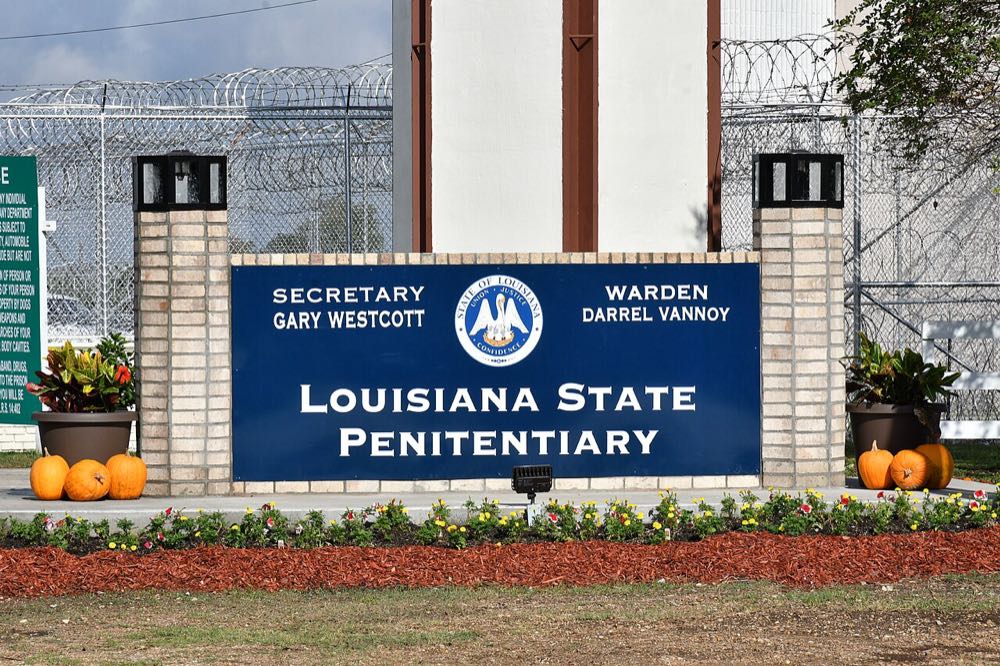
The Louisiana Department of Corrections (LA DOC) oversees adult correctional facilities throughout Louisiana. Its administrative headquarters is located at 504 Mayflower Street in Baton Rouge, East Baton Rouge Parish — the state capital and the largest city in the region. This is a central administrative and policy office; it does not hold inmates directly. People serving state sentences in Louisiana are housed at individual LA DOC prisons, privately operated correctional facilities, and the parish jails that contract with the department to board state-sentenced prisoners.
Our directory holds over 20,767 historical arrest and booking records linked to facilities under LA DOC oversight — a cumulative historical count, not the current population of any single site. LA DOC can be reached at 225-342-9711 (fax: 225-342-3349), and the department's website is at www.corrections.state.la.us.
About the Louisiana Department of Corrections
LA DOC was created in 1916 and is one of the oldest state correctional agencies in the South. It oversees a network of state-operated prisons, private facilities under contract, and the extensive parish jail system that boards state prisoners. Major LA DOC institutions include the Louisiana State Penitentiary at Angola (the largest maximum-security prison in the United States by land area, in West Feliciana Parish), the Elayn Hunt Correctional Center in Saint Gabriel, the Louisiana Correctional Institute for Women in St. Gabriel, and several medium-security facilities across the state.
Louisiana has one of the highest incarceration rates in the world — approximately 581 per 100,000 residents. The state's prison population is around 26,964, with an additional 32,560 individuals held in local jails. Louisiana's exceptionally high jail population relative to its prison population reflects the state's distinctive reliance on parish jails to house state-sentenced prisoners, a practice that makes the Louisiana system among the most complex to navigate for families.
The Parish Jail System: Louisiana's Defining Feature
No aspect of Louisiana's correctional system surprises families more than the parish jail arrangement. Louisiana has historically operated with fewer state prison beds than its sentenced population requires. Since at least the 1970s, the state has contracted with parish sheriffs to house state-sentenced inmates in local jails for a daily per diem payment. This creates a system where someone sentenced to a decade in state prison may serve the entire sentence at a small rural parish jail rather than at a state prison facility.
The practical implications are significant:
- The specific facility holding your loved one — and therefore the rules for visiting, mail, phone calls, and commissary — may be determined by which parish has available jail beds, not by anything related to the offense or the inmate's home community.
- Parish jails vary widely in size, services, programs, and conditions. Some are modern facilities with substance abuse treatment, education programs, and regular visitation; others are small, older jails with minimal programming.
- Rules at a contracted parish jail are set by the parish sheriff's office, not LA DOC — though they must meet minimum DOC standards. Always confirm rules directly with the specific parish facility.
The LA DOC Offender Search is the essential tool for determining where a specific person is currently housed.
How to Find an Inmate in Louisiana
To locate someone under LA DOC supervision:
- PrisonAssist.com: Search by name to check our directory for Louisiana facility records.
- LA DOC Offender Search: Available at www.corrections.state.la.us, this tool displays current housing assignments for state-supervised individuals, including placements at parish jails under contract. It is updated as transfers occur, though moves between facilities can take 24–48 hours to reflect.
- Phone: Call LA DOC headquarters at 225-342-9711 for guidance. For people recently arrested and not yet sentenced, contact the relevant parish jail or sheriff's office directly.
Visitation at Louisiana Correctional Facilities
Visitation policies vary substantially across LA DOC's network of state prisons, private facilities, and contracted parish jails. Here is the general framework:
- Visitor approval: All visitors must be on an approved visiting list before their first visit. At state facilities, the approval process typically involves a background check and can take two to four weeks. Parish jails may have simpler or more complex approval processes — confirm with the specific facility.
- Photo ID: Valid government-issued photo ID is required at all facilities. Current driver's licenses, state IDs, and passports are accepted.
- Visiting schedule: Days and hours vary by facility. State facilities publish schedules on the LA DOC website; parish jails set their own schedules. Confirm the current schedule directly with the facility before traveling — schedules can change due to lockdowns, emergencies, and holidays.
- Dress code: Strict dress codes are enforced. Colors and styles associated with inmate clothing, revealing clothing, and items with inappropriate content are prohibited. Rules vary by facility — confirm with the institution you plan to visit.
- Angola-specific considerations: Visiting the Louisiana State Penitentiary at Angola requires planning — the facility is in a remote rural area of West Feliciana Parish, far from major urban centers, and visiting days fill quickly. Plan well in advance.
Sending Mail
For mail to reach an LA DOC inmate, whether at a state prison, private facility, or contracted parish jail:
- Address envelopes with the inmate's full committed name, their DOC number, and the complete mailing address of the specific facility where they are currently housed. Using an old address after a transfer can delay or prevent delivery.
- Use plain white envelopes in standard sizes. Padded mailers, colored envelopes, and envelopes with internal patterns or metallic finishes are commonly rejected.
- Write on plain white paper; avoid colored paper, stickers, and adhesive items in the envelope.
- For parish jails: follow that specific jail's mail rules, which may differ from LA DOC state prison standards. Call the parish jail directly to confirm current requirements.
- Photographs are generally permitted within limits set by each facility — typically up to five per mailing, standard photo paper, no inappropriate content. Confirm with the specific facility.
Our letter service handles formatting, printing, and mailing to the facility's current rules, wherever in Louisiana's system your loved one is housed.
Phone Calls from Louisiana Correctional Facilities
Phone systems vary across Louisiana's correctional network. State prisons and private facilities each have contracted carriers; parish jails may use separate carrier agreements. Key points:
- Inmates add approved numbers through the facility's carrier system via kiosk or online portal.
- Prepaid accounts funded through the carrier's website provide better rates than collect calls.
- All calls are recorded and monitored except attorney-client calls. Be mindful of conversation content.
- Confirm which carrier serves the specific facility — parish jails may use a different provider than LA DOC state prisons.
Our discounted phone call service lowers rates across contracted carriers, making regular contact affordable even across Louisiana's geographically dispersed facility network. No changes needed on the inmate's end.
Commissary, Money Deposits, and Care Packages
Commissary access lets incarcerated individuals purchase approved personal items that supplement what the facility provides. To deposit funds:
- Most LA DOC state facilities use JPay for money transfers. Access JPay via website, app, or retail kiosk.
- Parish jails housing state prisoners may use different platforms — JPay, Tiger Commissary, or the parish jail's own deposit system. Confirm with the specific facility.
- Allow one to two business days for deposits to post.
Care packages for LA DOC state facilities must be ordered through approved vendors. Parish jails set their own package policies — some may allow packages from approved vendors; others may not permit outside packages at all. Always confirm current policy with the specific facility before ordering.
Bail in Louisiana
Bail in Louisiana is set by a judge or magistrate at the first appearance hearing, which Louisiana law requires to be held within 72 hours of arrest (or sooner in many parishes). How bail works:
- Many charges have preset bail schedules that allow release before the first appearance by paying the scheduled amount.
- At the first appearance, the judge may modify bail, set conditions of release, or, in serious cases, order detention without bail.
- A licensed Louisiana bail bondsman can post a surety bond for roughly 10% of the total bail — this fee is non-refundable.
- Louisiana has faced criticism for high cash bail in many parishes, resulting in extended pretrial detention for defendants who cannot afford bond. Reform advocacy has been active on this issue in Baton Rouge and New Orleans.
Our bail bond service connects you with licensed Louisiana bondsmen in the relevant parish for quick action after a bail amount is assigned.
Parole and Reentry in Louisiana
The Louisiana Committee on Parole reviews state inmates for parole eligibility after they have completed the required portion of their sentences. Louisiana has historically had restrictive parole practices — the state has one of the highest rates of life sentences in the nation — but reforms in recent years have expanded parole eligibility for more categories of offenders. The committee considers the type of offense, institutional behavior, program participation, and community support when making decisions.
LA DOC operates a network of reentry programs and community transition facilities designed to help people successfully return to their communities. Given Louisiana's reliance on parish jails — which vary widely in programming — families should advocate for access to the educational and vocational programs available at the specific facility, as participation in these programs supports both current well-being and future parole eligibility.
Louisiana's Incarceration Context
Louisiana's incarceration rate of 581 per 100,000 residents is among the highest in the world. Decades of mandatory minimum sentencing, habitual offender laws with severe enhancements, and significant use of life sentences without parole have driven the system's scale. Reform advocacy — from organizations including the Promise of Justice Initiative, the ACLU of Louisiana, and the Louisiana Center for Children's Rights — has generated meaningful legislative changes in recent years. Still, Louisiana remains one of the most challenging states in which to navigate the correctional system as a family member. Persistent, direct communication with the specific facility where your loved one is held is the most reliable approach.
Life Sentences and Long-Term Incarceration in Louisiana
Louisiana has one of the highest rates of life imprisonment in the world, including mandatory life sentences without parole for certain second-offense violent crimes and for first-degree murder. This means a significant portion of Louisiana's prison population consists of individuals serving life sentences with no parole eligibility under the law at the time of their conviction. Reform advocates have challenged some of these provisions, and the legislature has made limited adjustments over the years, but life sentences without parole remain common in the Louisiana system.
For families of people serving very long or life sentences, the emphasis shifts from short-term release planning to long-term support and connection. Visiting, writing, and maintaining phone contact over the years and decades are enormously meaningful — research consistently shows that maintaining family ties improves well-being and institutional adjustment, even for people who will not be released in the near term.
Legal Advocacy and Reform Organizations in Louisiana
Several organizations provide legal support and advocacy for people incarcerated in Louisiana and their families. The Promise of Justice Initiative (promiseofjustice.org) focuses on cases involving the death penalty and life sentences. The ACLU of Louisiana maintains an active criminal justice docket. The Roderick and Solange MacArthur Justice Center has litigated on behalf of people in Louisiana prisons. If you have concerns about conditions, medical care, or legal issues affecting a loved one in Louisiana's system, these organizations offer guidance and potential representation.
Practical Navigation Tips for Louisiana Families
Louisiana's multi-tiered system — state prisons, private prisons, and parish jail contracts — means that families must be especially proactive. Keep the following habits in mind. Use the LA DOC Offender Search regularly, because facility transfers in Louisiana happen frequently and without family notification. When your loved one is moved, re-confirm the new facility's specific rules for visits, mail, phone carrier, and commissary deposits before acting — assumptions based on the previous facility's rules will often be wrong. Maintain written notes of every official communication, including dates, staff names, and the substance of conversations. And remember that staying in consistent contact — even through brief letters during periods when visits and calls are difficult — provides meaningful psychological support for someone navigating one of the nation's most demanding correctional environments.
Inmate service providers at Louisiana Department of Corrections (LA DOC)
Like most US jails and prisons, Louisiana Department of Corrections (LA DOC) relies on private companies for phone calls, video visits, money transfers, and care packages, each with its own fees and sign-up steps. Nationwide the most common providers are Securus and ViaPath (GTL) for calls and video, JPay and Access Corrections for sending money, and Access Securepak for care packages.
Not sure which company serves the Louisiana Department of Corrections (LA DOC)? Our inmate service provider directory explains how each one works, what it charges, and how to set up an account before you pay.