


The Mississippi Department of Corrections (MDOC) is the state agency that oversees adult corrections throughout Mississippi. Its administrative headquarters is located at 633 North State Street in Jackson, Hinds County — the state capital. Like all state DOC headquarters, this address is an administrative and policy office; it does not hold inmates. People serving state sentences in Mississippi are held at individual MDOC-operated prisons, privately operated correctional facilities, and the county jails that contract with the state to board state-sentenced inmates.
Our directory contains over 35,544 historical arrest and booking records linked to facilities within Mississippi's correctional system — a cumulative total across facilities and years, not the current population at any single site. The MDOC main office can be reached at 601-359-5600, and the agency's website is at www.mdoc.state.ms.us.
About the Mississippi Department of Corrections
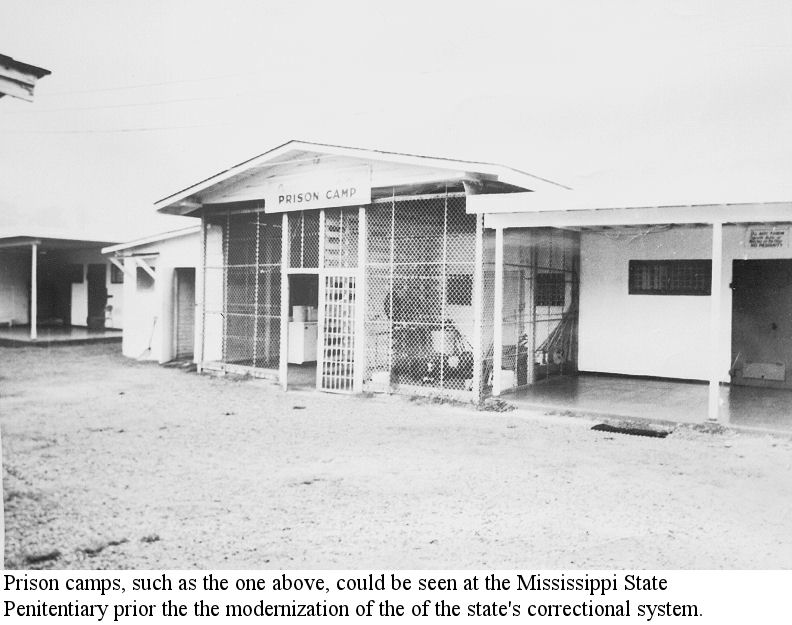
MDOC was reorganized into its current form in the early 1970s and has grown into an agency overseeing a complex network of facilities, including state-operated prisons, privately contracted prisons, and county-contracted jail beds. Major MDOC institutions include the Mississippi State Penitentiary (Parchman) in Sunflower County — one of the oldest and most historically significant prisons in the South — the Central Mississippi Correctional Facility in Pearl, and the South Mississippi Correctional Institution in Leakesville. The agency also oversees community corrections centers and the supervision of people on parole or post-release supervision.
Mississippi has one of the highest incarceration rates in the United States — approximately 584 per 100,000 residents. The state's prison population is roughly 17,311, with an additional 14,340 individuals held in local jails. These rates reflect decades of strict sentencing policies, mandatory minimums, and significant reliance on private prison contracts. MDOC's system has been the subject of substantial federal litigation, particularly regarding conditions at Parchman, and has been under scrutiny from civil rights organizations for years.
Private Prisons and County Contracts in Mississippi
A distinctive — and important — feature of Mississippi's correctional system is its heavy reliance on private prison operators and county jail contracts. Companies such as CoreCivic (formerly CCA) operate facilities in Mississippi under state contract, and county sheriffs across the state board state-sentenced prisoners for a per-diem payment from MDOC. This means someone with a state sentence may be housed at a privately operated facility, a county jail, or an MDOC-operated state prison — and the location can change as contracts and capacity shift.
This fragmented system has real practical implications: visitation policies, mail rules, commissary platforms, and phone systems all vary between MDOC-operated sites, private facilities, and county jails. Always confirm the exact location via the MDOC Inmate Search, then contact that facility for its rules, rather than assuming all MDOC facilities follow identical procedures.
How to Find an Inmate in the Mississippi System
To locate someone in Mississippi's correctional system:
- PrisonAssist.com: Search by name to check our records for Mississippi facility entries.
- MDOC Inmate Search: Available at www.mdoc.state.ms.us, this tool allows name and MDOC number searches. It shows current housing assignments, including placements at privately operated facilities and contracted county jails. Update regularly — transfers between sites are common in Mississippi's system.
- Phone: Call MDOC headquarters at 601-359-5600 if you are unable to locate someone online. Staff can direct you to the appropriate facility or records department.
People recently arrested who have not been sentenced will appear in county jail records, not in the MDOC system. Contact the relevant county sheriff's office for pretrial booking information.
Visitation at Mississippi Correctional Facilities
Visitation rules vary significantly across MDOC's network of facilities — state-operated, privately operated, and county-contracted sites each have their own policies. Here is what families need to know:
- Visitor approval: All facilities require that visitors be on an approved list before their first visit. The approval process typically involves the inmate submitting a request, which is reviewed by facility staff and may include a background check. Start the process early — approval can take two to four weeks at state and private facilities.
- Photo ID: Valid government-issued photo ID is required at all facilities. Bring a current driver's license, state ID, or passport.
- Visiting schedule: Days and hours vary by facility and housing unit. MDOC-operated facilities publish schedules on the agency website. For private or county facilities, check with the facility directly. Schedules change for lockdowns, emergencies, and operational needs — always confirm before traveling.
- Dress code: Strict dress codes are enforced at all facilities. Colors and styles of prohibited clothing vary by site, but clothing resembling inmate uniforms, revealing clothing, and clothing with inappropriate imagery or text are universally prohibited. Confirm the specific rules with the facility you intend to visit.
- Private facility visits: Private facilities operating under MDOC contracts set their own visitation procedures in accordance with MDOC guidelines. The specific company's facility staff are the authoritative source for current rules.
- County jail visits: County jails housing state inmates may have more limited visiting options — some have transitioned to video visitation. Confirm the format before traveling.
Sending Mail
Written mail is often the most consistent means of staying in contact, independent of visit schedules or phone access. For mail to reach an MDOC inmate successfully:
- Address envelopes with the inmate's full committed name, their MDOC number, and the mailing address for the specific facility where they are currently housed. Sending mail to a previous address after a transfer significantly delays correspondence.
- Use plain white envelopes in standard sizes. Padded mailers, colored or decorative envelopes, and envelopes with internal patterns are commonly rejected.
- Write on plain white paper; avoid colored paper, stickers, or adhesive items inside the envelope.
- Photographs are typically permitted within facility-specific limits — usually up to five per envelope, printed on standard photo paper, with no inappropriate content. Confirm photo rules with the specific facility (they differ between MDOC, private, and county sites).
- Books and publications generally must be sent new directly from publishers or approved vendors, not included in personal letters.
Our letter service formats, prints, and mails letters that comply with the rules of the facility currently housing your loved one. If the person is transferred, update us with the new facility information, and we will adjust accordingly.
Phone Calls from Mississippi Correctional Facilities
Phone calls from Mississippi correctional facilities are routed through contracted carriers, which vary by facility type. Key points for families:
- Inmates add approved numbers to their call list through the facility's phone carrier system — typically via a kiosk or the carrier's website. Numbers not on the list cannot be called.
- Prepaid accounts funded through the carrier's website or app are generally more economical than collect calls.
- All calls are recorded and monitored except documented attorney-client calls.
- Phone carriers and rates differ between MDOC-operated facilities, private facilities, and contracted county jails. Confirm which carrier serves the specific facility before setting up an account.
Our discounted phone call service lowers per-minute rates across contracted carriers, making regular contact more affordable. No changes are required on the inmate's end.
Commissary Deposits, Money Transfers, and Care Packages
Commissary access — the ability to purchase personal items from the facility store — is an important quality-of-life factor for incarcerated individuals. Accepted money transfer platforms vary:
- MDOC-operated facilities commonly use JPay for commissary deposits. Access JPay via website, mobile app, or retail kiosk.
- Private facilities and contracted county jails may use different platforms — confirm with the specific facility before sending money.
- Allow one to two business days for funds to post after a transfer.
Care packages must be ordered through vendors approved by the specific facility. Rules differ between MDOC-run sites, private prisons, and county jails. Confirm the approved vendor list and permitted items before ordering — packages sent outside the approved system will be refused.
Bail in Mississippi
Bail in Mississippi applies at the pretrial stage while someone is held in a county jail awaiting arraignment or trial. Once sentenced and transferred to MDOC supervision, bail is no longer applicable. How bail works:
- Bail is set by a justice court or circuit court judge at the initial appearance or arraignment hearing, typically within 48 hours of arrest.
- Many charges have preset bail schedules allowing release before arraignment upon payment of the scheduled amount.
- A licensed Mississippi bail bondsman can post a surety bond for roughly 10% of the total bail — this fee is non-refundable.
- For certain serious charges — capital murder, certain sex offenses — bail may be set very high or denied entirely.
Oversight, Litigation, and Conditions
Mississippi's prison system has been the subject of significant legal action and public concern over conditions, particularly at the Mississippi State Penitentiary (Parchman). Multiple federal lawsuits and Department of Justice investigations have targeted conditions including violence, inadequate medical care, and facility deterioration. Reform efforts have followed, but the system's challenges are ongoing.
For families concerned about the welfare of a loved one in an MDOC facility, organizations including the ACLU of Mississippi, the Mississippi Center for Justice, and the Southern Poverty Law Center maintain active work on Mississippi prison conditions. Staying in regular contact with your loved one — through letters, calls, and visits — is both a source of support for them and a way for you to stay directly informed about their situation.
Parole and Reentry in Mississippi
The Mississippi Parole Board reviews cases for parole eligibility after inmates have completed the required portion of their sentences. Parole decisions consider offense type, institutional behavior, program participation, and community support. Mississippi has historically had restrictive parole practices, though reforms in recent years — including HB 796 in 2021 — have expanded eligibility for more categories of offenders.
MDOC operates community corrections centers that provide a supervised reentry step between prison and full community release. Maintaining family connections throughout incarceration is among the strongest protective factors for successful reentry, making regular communication through letters, calls, and visits an investment in long-term outcomes for everyone involved.
Mental Health, Medical Care, and Advocacy in Mississippi
Mississippi's prison system has faced serious, sustained criticism regarding mental health care and general living conditions. Federal litigation — including the long-running Dockery v. Hall case — targeted inadequate mental health treatment at MDOC facilities. Multiple Department of Justice investigations have identified deficiencies in conditions, staffing, and medical care. If you have concerns about the welfare of a loved one in MDOC custody, documenting those concerns in writing and reaching out to advocacy organizations is an appropriate step.
Organizations active on Mississippi prison conditions include the ACLU of Mississippi (aclu-ms.org), the Southern Poverty Law Center (splcenter.org), and the Mississippi Center for Justice. These groups maintain active dockets on prison conditions and can guide on how to raise medical, safety, or other conditions-related concerns through appropriate legal and administrative channels.
Education and Vocational Programs in Mississippi Prisons
Despite challenges in Mississippi's system, MDOC operates educational and vocational programs at several of its facilities. GED preparation, adult basic education, and vocational training in trades like welding, carpentry, and auto mechanics are available at select institutions. Program availability varies significantly among MDOC-operated facilities, privately contracted prisons, and contracted county jails — county jails, in particular, often have limited programming. Encouraging participation in available programs is one of the most constructive things families can do, both for the person's well-being and for their future parole eligibility and reentry prospects.
Practical Tips for Navigating the Mississippi System
Because Mississippi's correctional network spans so many facility types and operators, a few practical habits will serve families well. First, check the MDOC Inmate Search frequently — transfers between facilities happen with little notice, and mail or visit plans based on an outdated location will fail. Second, whenever your loved one is transferred, confirm the new facility's rules independently rather than assuming they carry over from the previous site. Third, keep a written record of every facility contact — names, dates, what was said — because having documentation is essential if any issue escalates to a complaint or legal proceeding. Finally, stay connected: even a brief letter or a short phone call represents meaningful support for someone navigating incarceration in one of the country's most challenging correctional systems.
Inmate service providers at Mississippi Department of Corrections (MDOC)
Like most US jails and prisons, the Mississippi Department of Corrections (MDOC) relies on private companies for phone calls, video visits, money transfers, and care packages, each with its own fees and sign-up steps. Nationwide the most common providers are Securus and ViaPath (GTL) for calls and video, JPay and Access Corrections for sending money, and Access Securepak for care packages.
Not sure which company serves the Mississippi Department of Corrections (MDOC)? Our inmate service provider directory explains how each one works, what it charges, and how to set up an account before you pay.