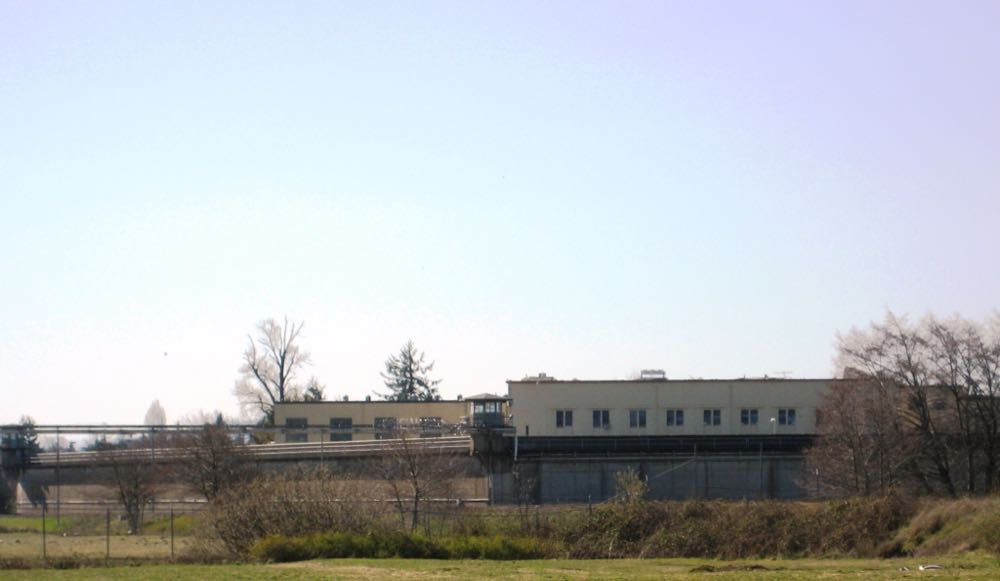

The Oregon Department of Corrections (OR DOC) is the state agency that manages Oregon's adult prison system. Its administrative headquarters is located at 2575 Center Street NE in Salem, Oregon 97301, in Marion County — the state's capital city. This is the agency's central administrative and policy office; inmates are housed at 12 individual state prisons distributed across Oregon, from the Portland metro area to remote eastern Oregon. OR DOC is led by Director Mike Reese and was created by the Oregon Legislature in 1987.
Our directory holds over 12,749 historical arrest and booking records linked to facilities under Oregon's correctional system — a cumulative historical count, not a current population figure. OR DOC headquarters can be reached at 503-945-9090 (fax: 503-373-1173), and the agency's full resources are available at corrections.oregon.gov.
About the Oregon Department of Corrections
OR DOC was established in 1987 when the Oregon Legislature created a standalone corrections agency, separating corrections functions from law enforcement. The department has custody of approximately 12,000 adults in its 12 state prisons at any given time. In addition to its prison operations, OR DOC provides funding, program evaluation, and oversight for the community corrections activities of Oregon's county governments — which handle probation and parole supervision for most of the state. The agency directly operates community corrections in Linn and Douglas counties, which opted out of the local control system in 2004.
Oregon's state imprisonment rate is approximately 300 per 100,000 residents, with a state prison population of around 12,747. An additional 6,040 individuals are held in local county jails statewide. Oregon incarcerates people sentenced to prison terms of more than 12 months — those sentenced to 12 months or less typically serve their sentences in county jail.
Oregon's 12 State Prisons
OR DOC operates a geographically diverse network of 12 institutions:
- Oregon State Penitentiary (OSP), Salem: Oregon's oldest and largest maximum-security prison, established in 1866. Capacity: 2,242. OSP houses the state's death row population and the most serious offenders. A feasibility study is currently underway to assess the feasibility of replacing OSP with a new facility due to significant deferred maintenance and structural challenges.
- Snake River Correctional Institution (SRCI), Ontario: Oregon's largest prison by design capacity (3,000), located in eastern Oregon near the Idaho border. Houses a wide range of security levels, including maximum.
- Two Rivers Correctional Institution (TRCI), Umatilla: Minimum-to-maximum security, capacity 1,632, in northeastern Oregon.
- Coffee Creek Correctional Facility (CCCF), Wilsonville: Oregon's only full-service women's facility, housing approximately 1,685 women across minimum to medium security levels, with co-ed programming at the adjacent minimum-security campus.
- Eastern Oregon Correctional Institution (EOCI), Pendleton: Medium-to-maximum security, capacity 1,600. Hosts Oregon Corrections Enterprises (OCE) manufacturing programs.
- Deer Ridge Correctional Institution (DRCI), Madras: Minimum-to-medium security, capacity 2,002. Some units were previously mothballed; reopening of additional units is being evaluated as population forecasts change.
- Oregon State Correctional Institution (OSCI), Salem: Medium-to-maximum security, capacity 888.
- Columbia River Correctional Institution (CRCI), Portland: Minimum security, capacity 595. Located in Northeast Portland, providing proximity to Portland-area family networks and employment opportunities for work release participants.
- Santiam Correctional Institution (SCI), Salem: Minimum security, capacity 440.
- Powder River Correctional Facility (PRCF), Baker City: Minimum security, capacity 286, in eastern Oregon.
- South Fork Forest Camp (SFFC), Tillamook: Minimum security, capacity 204. Houses inmates who participate in forest and environmental work.
- Warner Creek Correctional Facility (WCCF), Lakeview: Minimum security, capacity 475, in south-central Oregon.
The Oregon State Penitentiary Replacement
Oregon's oldest prison — the Oregon State Penitentiary, opened in 1866 — is under serious consideration for full replacement. The facility faces enormous deferred maintenance costs, seismic compliance needs, and HVAC infrastructure challenges. In 2025, Oregon's Governor included $4.5 million in general funds in the budget for a feasibility study and conceptual design for both a new Centralized Health Care Facility (for medical, mental health, and geriatric care) and the replacement of OSP itself. The study will evaluate DOC-owned property in Salem and in Junction City as potential sites for new facilities. OSP's site in Salem — prime urban real estate — could potentially be redeveloped for housing or commercial uses if the prison relocates. Reports on the feasibility study's findings are due to the legislature during the 2026 and 2027 sessions.
How to Locate an Inmate in Oregon
To find someone in Oregon's state prison system:
- PrisonAssist.com: Search by name to check our directory for Oregon facility records.
- OR DOC Offender Search: Available at corrections.oregon.gov, this tool allows searches by name and shows current housing assignments. OR DOC refers to incarcerated individuals as "Adults in Custody" (AICs)—this term may appear in search results and facility communications.
- Phone: Call OR DOC headquarters at 503-945-9090 for assistance finding a specific individual or their current facility.
For people recently arrested in Oregon and not yet sentenced, they will be held in a county jail — contact the relevant county sheriff's office or county jail. State prison intake follows a sentence of more than 12 months.
Visitation at Oregon State Prisons
OR DOC facilities support regular visitation. Due to budget constraints and ongoing staffing challenges, visiting schedules at some facilities were modified in 2025 and 2026 — always confirm current schedules directly with the specific institution before making travel plans. General framework:
- Visitor approval: Visitors must be on an AIC's approved visiting list before the first visit. The AIC submits a visitor request, which is reviewed by facility staff and may include background checks. Approval can take several weeks — start the process early.
- Photo ID: Valid government-issued photo ID is required at all facilities. Driver's licenses, state IDs, and passports are standard.
- Visiting schedule: Days and hours differ by facility. Due to recent budget modifications, some facilities reduced visiting frequency or hours. Check the specific facility's page at corrections.oregon.gov and call to confirm before traveling.
- Dress code: Strict dress codes are enforced at all OR DOC facilities. Colors resembling staff or inmate uniforms — typically blue or green at many institutions — and revealing clothing are prohibited. Confirm the specific facility's color restrictions before your visit.
- Remote facilities: Several OR DOC prisons are in eastern Oregon — Snake River CI (Ontario), Eastern Oregon CI (Pendleton), Powder River CF (Baker City), and Warner Creek CF (Lakeview) — all require significant travel from Portland and the Willamette Valley. Plan travel time carefully, especially in winter when road conditions in eastern Oregon can be hazardous.
Sending Mail to Oregon State Prisons
For mail to reach an OR DOC inmate:
- Address envelopes with the AIC's full committed name, their SID (State Identification) number, and the complete mailing address of the specific facility where they are housed. OR DOC uses "SID" rather than "DOC number" — confirm the correct number format with the facility.
- Use plain white envelopes in standard sizes. Padded mailers, colored or patterned envelopes are commonly rejected.
- Write on plain white paper. Avoid stickers, adhesive items, and colored paper.
- Photographs are permitted within facility-specific limits. Confirm current photo rules — size, quantity, and content restrictions — with the specific institution.
- Books and publications must be sent new from publishers or OR DOC-approved vendors directly to the facility.
Our letter service formats, prints, and mails letters in compliance with OR DOC mail standards, reducing the likelihood of mailroom rejection.
Phone Calls, Commissary, and Care Packages
Phone calls from Oregon state prisons are placed through contracted carriers. Inmates add approved numbers to their call lists through the carrier's platform. Family members fund prepaid accounts for better rates than collect calls. All calls are recorded except attorney-client calls. Our discounted phone call service reduces per-minute costs, making regular contact affordable for families across Oregon's geographically dispersed prison network.
Commissary deposits for OR DOC inmates are handled through contracted platforms — check the specific facility's page at corrections.oregon.gov for accepted methods. Care packages must be ordered through approved vendors. Confirm current vendor and item policies with the specific institution before ordering.
Oregon Corrections Enterprises (OCE)
Oregon Corrections Enterprises is OR DOC's prison industry program, providing paid work opportunities for AICs in manufacturing, agriculture, printing, and services. OCE employs over 1,200 AICs across multiple facilities and produces products sold to state agencies and other approved buyers. Participation in OCE provides wages (deposited in inmate accounts), work skills, and structured daily activity. Several facilities — particularly Eastern Oregon CI in Pendleton — host major OCE manufacturing operations. For families, OCE employment signals stable engagement in programming and supports the AIC's ability to fund commissary, calls, and correspondence.
Education and Programming in Oregon Prisons
OR DOC operates an extensive programming portfolio including adult basic education, GED and high school diploma programs, vocational training, and college courses through partnerships with community colleges. Oregon's correctional education programs are among the most developed in the western United States. Cognitive behavioral programs addressing criminal thinking, substance abuse treatment, and mental health services are also available across the system. Participation in programming is a factor in parole board decisions and earned time calculations. Families can encourage loved ones to engage with available programs as a meaningful contribution to long-term outcomes.
Bail in Oregon
Bail in Oregon is set by a circuit court judge at arraignment, typically within 24–48 hours of arrest. Oregon uses a structured bail schedule for many offenses, and judges consider flight risk and public safety in their decisions. A licensed Oregon bail bondsman can post a surety bond for roughly 10% of the total bail amount — non-refundable. Oregon has explored pretrial reforms and uses conditional release with supervision as an alternative to cash bail for some defendants. Once sentenced and transferred to OR DOC, bail is no longer applicable.
Parole and Reentry in Oregon
Oregon's Board of Parole and Post-Prison Supervision (BOPPS) reviews cases for discretionary parole and makes post-prison supervision decisions. Oregon uses determinate sentencing for many crimes under Measure 11 (passed in 1994), which mandates specific minimum sentences for listed violent and sex offenses with no possibility of early release. For Measure 11 offenses, individuals must serve the full minimum sentence before being considered for release. Families of individuals serving Measure 11 sentences should understand that the release date is driven by the statutory minimum, not by behavior or programming participation, though post-release supervision conditions are still determined by BOPPS.
County-level community corrections departments manage parole and probation supervision for most released Oregon inmates. OR DOC provides funding and oversight to these county programs, ensuring statewide standards while preserving local flexibility.
Oregon's Incarceration Context
Oregon's imprisonment rate of 300 per 100,000 residents is near the national average. Oregon closed two minimum-security prisons in 2021–23 as the prison population declined following COVID-era changes and House Bill 4002, which reduced penalties for drug possession. However, more recent forecasts anticipate a gradual population increase that may require additional capacity in the coming decade. The feasibility study for replacing the aging Oregon State Penitentiary — opened in 1866 — reflects the department's recognition that its facility infrastructure requires fundamental modernization to meet the demands of contemporary correctional practice.
Practical Navigation Tips for Oregon Families
Oregon's geographically diverse prison network creates real logistical challenges for families. If your loved one is housed at Snake River CI in Ontario or Two Rivers CI in Umatilla — both in eastern Oregon — a visit from Portland involves a five-hour drive each way. In these cases, letters and phone calls take on greater importance as the primary means of staying connected between infrequent visits. If proximity to family is a factor in institutional assignment, it is worth communicating this to the AIC's assigned counselor as classification allows — OR DOC considers proximity to community ties as one factor in placement when security and programming needs allow.
Also keep in mind that OR DOC's budget constraints led to visiting schedule modifications at some facilities in 2025–2026. Before making travel plans, always confirm current visiting availability at the specific institution by checking the facility's page at corrections.oregon.gov or by calling the facility directly. The department's email communications are also a reliable way to get current information — subscribe to facility updates if that option is available for your loved one's institution.
Legal Aid and Advocacy in Oregon
The Oregon Public Defense Commission provides legal representation for those who cannot afford private counsel in criminal cases. Oregon Law Center and Legal Aid Services of Oregon assist with civil legal matters. The ACLU of Oregon maintains an active civil rights and prisoners' rights docket. If you have concerns about conditions, access to programming, or a loved one's rights at an OR DOC facility, these organizations can provide guidance. OR DOC's Inspector General's office also accepts complaints about facility conditions and staff conduct.
Inmate service providers at Oregon Department of Corrections - (OR DOC)
Like most US jails and prisons, Oregon Department of Corrections - (OR DOC) relies on private companies for phone calls, video visits, money transfers, and care packages, each with its own fees and sign-up steps. Nationwide the most common providers are Securus and ViaPath (GTL) for calls and video, JPay and Access Corrections for sending money, and Access Securepak for care packages.
Not sure which company serves the Oregon Department of Corrections (OR DOC)? Our inmate service provider directory explains how each one works, what it charges, and how to set up an account before you pay.