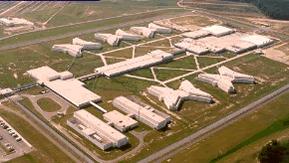
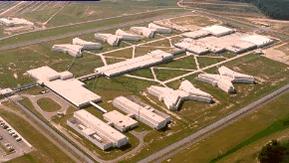

The South Carolina Department of Corrections (SCDC) is the state agency that manages South Carolina's adult correctional system. Its administrative headquarters is located at 4444 Broad River Road in Columbia, Richland County, South Carolina (mailing address: PO Box 21787, Columbia, SC 29210). This is a central administrative and policy office, not a holding facility. Incarcerated individuals under SCDC jurisdiction are held at the department's 21 correctional institutions distributed across the state.
Our directory holds over 13,494 historical arrest and booking records linked to South Carolina facilities — a cumulative count over time, not a current population figure. SCDC headquarters can be reached at 803-896-8500, and the department's family resources are available at www.doc.sc.gov.
About the South Carolina Department of Corrections
SCDC was established as a standalone agency in 1968 and has grown into one of the larger state correctional departments in the southeastern United States. The agency operates 21 institutions, ranging from maximum- to minimum-security facilities, a women's prison, and multiple specialized institutions. SCDC's current inmate population is approximately 15,984, making it one of the larger prison systems in the region. South Carolina's imprisonment rate is approximately 304 per 100,000 residents, with an additional 11,470 individuals held in county detention centers statewide.
SCDC institutions include well-known facilities such as Broad River Correctional Institution (Columbia), Kirkland Correctional Institution (Columbia), Lee Correctional Institution (Bishopville), and Lieber Correctional Institution (Ridgeville) — some of the state's highest-security facilities. Women are primarily housed at Camille Graham Correctional Institution in Columbia and Leath Correctional Institution in Greenwood.
How to Find an Inmate in South Carolina
To locate someone in SCDC's system:
- PrisonAssist.com: Search by name to check our directory for South Carolina facility records.
- SCDC Inmate Search: SCDC provides an online inmate locator at www.doc.sc.gov that allows searches by name or SCDC number and shows current housing assignments.
- Phone: Call SCDC headquarters at 803-896-8500 for assistance finding a specific individual's current location.
For people recently arrested and not yet sentenced, they are held in South Carolina county detention centers — SCDC receives sentenced offenders. Contact the relevant county sheriff's detention center for pretrial booking information.
Visitation at SCDC: The GTL VisitMe System
SCDC manages all visitation — both in-person and video — through the GTL VisitMe platform (also known as ViaPath Technologies). This is the most important thing to know before planning a visit: all scheduling is done through GTL, not by calling the facility directly. Here is the complete visitation process:
Step 1: Register as a Visitor
Starting June 1, 2025, most adult visitors with a valid South Carolina driver's license can register online at scdoc.gtlvisitme.com/app. Visitors without a qualifying SC ID — including out-of-state visitors, visitors without a driver's license, and minors — must submit a paper application by mail to SCDC Division of Visitation, P.O. Box 212969, Columbia, SC 29221-2969. Only individuals on the inmate's approved visiting list (up to 15 approved visitors per inmate) can register. The inmate initiates the visitor request by having them send the application.
Step 2: Schedule Your Visit
Once registered and approved, all visits must be scheduled through the GTL scheduler at least 15 hours in advance for in-person visits. Video visits (virtual) must be scheduled between 3 and 7 days in advance. Visits are offered on Saturdays and Sundays at all SCDC institutions, from 8 a.m. to 4 p.m. in 2-hour blocks. General population inmates with visitation privileges are allowed up to four in-person visits per month, generally one per weekend. Up to four visitors may attend each visit, and at least one visitor must be an adult.
Contact vs. Non-Contact Visits
Visits at SCDC's maximum-security and higher-security medium-custody institutions are non-contact — conducted through plexiglass booth partitions. Non-contact facilities include: Broad River, Kershaw, Kirkland, Lee, Lieber, McCormick, Perry, Ridgeland, and Turbeville.
All other SCDC institutions allow contact visits. Contact facilities include: Allendale, Camille Graham, Evans, Goodman, Leath, Livesay, MacDougall, Manning, Palmer, Trenton, Tyger River, and Wateree River.
What to Know Before You Visit
- Children: Children ages 10 and older need a government-issued photo ID; children 9 and younger need a long-form birth certificate.
- Prohibited items: Cell phones, smartwatches, and fitness trackers are not permitted. Plan to leave all devices in your vehicle.
- Cancellations: A 48-hour cancellation policy applies — cancel within 48 hours if you cannot attend to avoid affecting your visitation privileges.
- Video visits: At-home video visits can be conducted remotely via computer or mobile device through the GTL system. Connect 15 minutes early and test your connection before the scheduled time.
- Dress code: Dress code requirements are enforced. Confirm the specific institution's clothing restrictions before your visit to avoid being turned away.
Sending Mail to SCDC Inmates
Mail is processed through SCDC's mailrooms at each facility. For mail to reach an SCDC inmate:
- Address envelopes with the inmate's full committed name, their SCDC number, and the complete mailing address of the specific facility where they are housed.
- Use plain white envelopes in standard sizes. Non-standard envelopes, padded mailers, and envelopes with colored or metallic interiors are rejected in mailroom screening.
- Write on plain white paper. Avoid stickers, adhesive items, and colored paper inside the envelope.
- Photographs are permitted within facility-specific limits — confirm current rules (size, quantity, content) with the specific institution.
- Do not include cash, checks, or gift cards in letters — these will be confiscated. Use approved money transfer platforms.
Our letter service formats, prints, and mails letters in compliance with SCDC mail rules. If you have photos to share, we handle printing and packaging in accordance with the facility's guidelines.
Phone Calls from SCDC Facilities
SCDC's phone system is also managed through GTL (ViaPath Technologies), the same vendor that handles visitation scheduling. Inmates can make outgoing calls to approved numbers on their call list. Family members fund prepaid accounts through the GTL website or app for economical rates. All calls are recorded and monitored except attorney-client calls. Our discounted phone call service lowers per-minute rates further, making regular contact with a loved one in any SCDC facility more affordable.
Commissary Deposits and Sending Money
To add funds to an SCDC inmate's account for commissary purchases, SCDC uses contracted money transfer services — check the SCDC family resources page at www.doc.sc.gov/family for currently accepted platforms and instructions. JPay is among the commonly used options. Funds typically post within one to two business days. Commissary items available vary by facility security level and include hygiene products, food, clothing, and, in some facilities, small electronics.
Care Packages
SCDC maintains an approved vendor program for care packages. Confirm current approved vendors and permitted item categories through the SCDC website or by contacting the specific facility's visitation office at visitation@doc.sc.gov. Packages submitted outside the approved vendor system will be refused at intake.
Bail in South Carolina
Bail in South Carolina is set by a magistrate judge at a bond hearing, which must occur within 24 hours of arrest under state law. South Carolina courts consider the nature of the charge, criminal history, and community ties when setting bond amounts. A licensed South Carolina bail bondsman can post a surety bond for roughly 10% of the total bond — non-refundable. Once someone is sentenced and transferred to SCDC custody, bail no longer applies.
South Carolina has a structured bond schedule for many offenses that allows release on a preset amount before the hearing. For serious felonies, the court may set a high bond or deny it entirely. Our bail bond service connects you with licensed South Carolina bondsmen for fast action after a bond amount is set.
Education, Vocational Training, and Programs in SCDC
SCDC operates a comprehensive programming portfolio across its institutions. The agency offers adult literacy and GED preparation, vocational training in trades including welding, construction, culinary arts, and automotive technology, and substance abuse treatment programs. SCDC also operates correctional industries programs — including upholstery, metal fabrication, and printing operations — that employ inmates in structured work settings and provide vocational skills training. Program participation affects disciplinary classification and parole consideration. Families can encourage engagement with available programs as both a quality-of-life benefit and a long-term investment in reentry readiness.
Parole and Reentry in South Carolina
South Carolina's Parole and Probation and Pardon Services Board oversees parole decisions. South Carolina uses indeterminate sentencing for many offenses, meaning parole eligibility depends on serving the minimum required portion of the sentence plus demonstrating institutional readiness. For certain mandatory minimum and "85 percent" offenses, parole eligibility is restricted. Factors considered at parole hearings include institutional conduct, program participation, available housing and employment, and victim input.
SCDC's reentry programs include pre-release case planning, connections to community-based housing and employment resources, and coordination with county probation/parole officers who will supervise individuals after release. Staying in regular contact with a loved one throughout incarceration — through GTL visits, letters, and calls — supports their wellbeing and maintains the community connections most predictive of successful reentry.
South Carolina's Incarceration Context
South Carolina's imprisonment rate of approximately 304 per 100,000 residents is near the national average, though the state has historically had one of the higher rates in the southeastern United States. SCDC has undertaken significant reform efforts in recent years, including expanded diversion and treatment programs and an emphasis on evidence-based programming. The department's adoption of the GTL VisitMe system for centralized visitation scheduling reflects a broader trend toward technology-driven management of family connections — a practice that simplifies scheduling but requires families to be comfortable with digital tools and to monitor their GTL accounts for updates on scheduling changes or visit approvals.
Violence and Safety at SCDC Facilities
South Carolina's high-security facilities — particularly Lee Correctional Institution in Bishopville — have experienced serious violence in recent years. A mass stabbing incident at Lee CI in April 2018 resulted in seven deaths and was one of the deadliest prison incidents in the United States in decades. SCDC has since implemented reforms including updated contraband detection, modified housing arrangements, and increased programming to reduce idleness. For families with loved ones at Lee or other higher-security SCDC facilities, staying in regular contact and promptly reporting any welfare concerns to facility administration is important. If you believe someone is in immediate danger, contact the facility's emergency line directly and request to speak with a supervisor.
Legal Aid and Advocacy in South Carolina
South Carolina Legal Services provides civil legal assistance for low-income residents, including issues that arise during or after incarceration. The ACLU of South Carolina maintains a criminal justice and prisoners' rights docket. The South Carolina Commission on Indigent Defense provides criminal defense representation for those who cannot afford private counsel. If you have concerns about the conditions of confinement, access to medical care, or other rights issues affecting a loved one at an SCDC facility, these organizations can provide guidance on available legal remedies. SCDC's Office of Inmate Services also handles administrative grievance procedures — documenting concerns in writing through the formal grievance system creates a record that may be important for any subsequent legal action.
Navigating the GTL System: Practical Tips
The GTL VisitMe platform that manages SCDC visiting and phone services is a capable system, but it requires families to actively manage their accounts. Keep the following in mind: your GTL account must have a valid photo ID on file — if your ID expires or changes, update it promptly at visitation@doc.sc.gov to avoid disruptions to your visit approval. Monitor your GTL account for messages about visit confirmations, schedule changes, or cancellations — SCDC communicates important updates through the platform. If a visit is canceled due to a lockdown or facility event, it counts toward your monthly visit allotment only if the cancellation was on your side; lockdowns initiated by the facility typically do not count against your monthly limit, but confirm this with the facility. Having a backup communication plan — a letter written and ready to mail, or a scheduled phone call — ensures you maintain contact even when visit logistics become complicated. Consistent communication in any form is one of the most important things you can do to support a loved one's wellbeing and eventual successful reentry from an SCDC facility.
Inmate service providers at South Carolina Department of Corrections (SCDC)
Like most US jails and prisons, South Carolina Department of Corrections (SCDC) relies on private companies for phone calls, video visits, money transfers, and care packages, each with its own fees and sign-up steps. Nationwide the most common providers are Securus and ViaPath (GTL) for calls and video, JPay and Access Corrections for sending money, and Access Securepak for care packages.
Not sure which company serves the South Carolina Department of Corrections (SCDC)? Our inmate service provider directory explains how each one works, what it charges, and how to set up an account before you pay.