

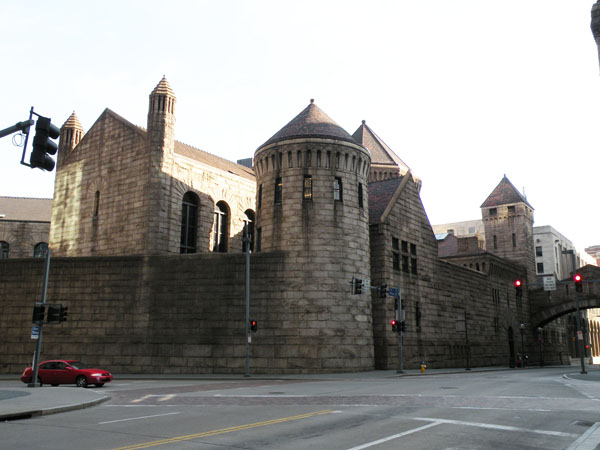

The Allegheny County Jail (ACJ) is the county jail serving Allegheny County, Pennsylvania, which includes the city of Pittsburgh. Located at 950 Second Avenue in Pittsburgh, PA 15219, along the Monongahela River downtown, the facility has a capacity of approximately 2,766 beds, making it one of the largest county jails in Pennsylvania. The ACJ houses adults arrested in Allegheny County who are awaiting trial, as well as individuals serving shorter sentences. If you have a loved one held here, this guide explains how to find them, stay connected, and support them through the process.
About the Allegheny County Jail
As the county jail for the Pittsburgh metropolitan area, the ACJ is a busy, medium-security facility that processes thousands of bookings each year. It is operated by Allegheny County and overseen by a Jail Oversight Board. The facility's main phone number is 412-350-2000 (available 24 hours for inmate information), and the Records Office is at 412-350-2635. Facility information is available on the Allegheny County website at alleghenycounty.us.
The records-on-file figure associated with this listing reflects historical booking and arrest records accumulated over time — not the number of people currently held. As a major metropolitan jail, custody status changes constantly as people are booked, released, and transferred.
How to Find an Inmate at Allegheny County Jail
You can locate someone at the ACJ through the official jail inmate roster on the Allegheny County website, or through VINELink (vinelink.com), a national inmate tracking and notification service. The online lookup lets you search by:
- Name
- Booking date
- Identification or booking number
The search returns booking dates, charges, release status, and housing information. You can also call the jail's 24-hour line at 412-350-2000 or the Records Office at 412-350-2635, or search PrisonAssist.com for historical booking records. New bookings can take a few hours to appear, so check again later if a name doesn't come up immediately.
VINELink is particularly useful because it allows you to register for automatic notifications about changes to an inmate's custody status, including release — a valuable tool for victims and concerned family members.
Visiting Someone at Allegheny County Jail
The ACJ offers both in-person and video visitation. Here's how each works:
In-Person Visits
- All in-person visits must be scheduled at least 48 hours (two days) in advance.
- Visitors must check in no later than 15 minutes before the scheduled visit time.
- To become an approved visitor, call the jail or register in person between 7:00 AM and 7:00 PM.
- Visitation hours are generally Monday–Friday 7:30 AM–9:00 PM and Saturday–Sunday 7:30 AM–2:30 PM.
Video Visits
- Video visitation is available daily from 9:00 AM to 9:00 PM.
- Video visits are limited to 30 minutes and charged at $0.25 per minute.
- Remote video visits can be conducted from your own device after registering with the video provider.
Bring a valid government-issued photo ID for in-person visits. Dress conservatively and follow the facility's dress code. Minors must be accompanied by an approved adult. Always confirm the current visiting policy on the Allegheny County website before traveling, as schedules can change.
Sending Mail to Allegheny County Jail
To send mail to an inmate at the ACJ, address it as follows:
[Inmate Full Name], [DOC/Booking Number]
Allegheny County Jail
950 Second Avenue
Pittsburgh, PA 15219
Include a complete, legible return address with your full first and last name on every item, and put the incarcerated person's full name and their ID or booking number on the outside of every envelope. All incoming mail is inspected for contraband. Prohibited items include cash, stamps, stickers, glitter, and anything that could carry drugs. The ACJ, like many facilities, may process general correspondence through a scanning system — check the county website for current procedures. PrisonAssist.com offers a letter service that formats and mails correspondence to meet facility requirements.
Phone Calls from Allegheny County Jail
Inmates at the ACJ use a phone service provided by Getting Out (a GTL / ViaPath company). Inmates can make outbound calls but cannot receive incoming calls. Calls are made either pay-per-call or through a preloaded account. To receive calls:
- Create an account at gettingout.com (ViaPath/GTL).
- Fund your account and register your phone number.
- The inmate can then call you, with charges deducted from your balance.
- All calls except confidential legal calls are recorded and monitored.
If the cost of calls is a concern, PrisonAssist.com can help set up lower-cost calling options to make it more affordable to stay in regular contact.
Sending Money and Commissary to Allegheny County Jail
Money deposited into an inmate's trust account allows them to purchase commissary items and fund communications. Important: < strong> As of November 1, 2024, only individuals who are on an inmate's approved visitor list may make deposits into the inmate's trust account. Deposit options include:
- By phone: Place funds by calling 1-866-345-1884 (Access Corrections).
- By mail: Send a money order through the mail. Money orders over $100 are placed on a 10-day hold.
- Online/kiosk: Through the approved deposit vendor (check the county website for current options).
You'll need the inmate's name and ID/booking number for any deposit. Keep your receipts. Because of the November 2024 rule, make sure you are on the approved visitor list before attempting a deposit.
Posting Bail at Allegheny County Jail
After an arrest in Allegheny County, charges are logged, and bail is set at a preliminary arraignment, often conducted by video before a magisterial district judge within hours of arrest. The process generally works as follows:
- Booking and arraignment: The arrested person is processed and brought before a magistrate who sets bail based on the charges, criminal history, flight risk, and public safety.
- Bail set: Bail can range from Release on Recognizance (ROR — no money required) to a monetary amount.
- Posting bail: Pay the full bail amount directly with the court/jail, or use a licensed Pennsylvania bail bondsman who charges a non-refundable premium (typically around 10% of the bail amount).
- Release: Once bail is posted and processing is complete, the person is released, usually within a few hours.
Bail information and bond conditions can usually be viewed in the official jail roster or related court listings. Numerous licensed bail bond agencies operate in Pittsburgh. To find one, search "bail bonds Pittsburgh PA" or contact PrisonAssist.com for referrals. Posting bail does not resolve charges — it allows release pending the court date.
Programs and Services at the Facility
The ACJ offers programming aimed at rehabilitation and reentry, including for individuals on shorter stays:
- Medical and Mental Health Services: On-site medical care and mental health screening, including crisis intervention and suicide prevention.
- Substance Abuse Treatment: Programs addressing addiction, including medication-assisted treatment that Allegheny County has expanded in recent years.
- Educational Programming: GED preparation and adult literacy instruction.
- Reentry Services: Connections to housing, employment, and treatment resources upon release, often coordinated through Allegheny County's human services network.
- Faith-Based Programming: Chaplaincy and volunteer-led faith programs.
Allegheny County in Pennsylvania's Two-Tier System
Pennsylvania separates county jails (like the ACJ) from the state Department of Corrections. County jails handle pretrial detention and sentences under two years; the state system handles longer sentences. If your loved one is sentenced to two years or more, they will likely be transferred from the ACJ to a Pennsylvania state prison, where mail, visiting, and phone procedures differ. Track any transfer using the PA DOC inmate locator at cor.pa.gov and update your contact arrangements accordingly. Allegheny County has also been active in criminal justice reform, including efforts to reduce the jail population through diversion and pretrial-release programs.
Understanding the Allegheny County Court Process
Most people at the Allegheny County Jail are pretrial detainees whose cases are moving through the Allegheny County Court of Common Pleas. After the preliminary arraignment, where bail is set, the case proceeds through a preliminary hearing, a formal arraignment, pretrial conferences, and potentially a trial. Understanding this timeline helps families stay informed about what comes next. For court date information, contact the Allegheny County Court. If your loved one cannot afford an attorney, the Allegheny County Public Defender's Office provides representation and is often the key advocate for pretrial release and favorable case outcomes.
Diversion, Reform, and Reentry in Allegheny County
Allegheny County has been active in criminal justice reform, including efforts to safely reduce the jail population through pretrial services, diversion programs, and specialty courts (drug court, mental health court, veterans court). If you believe your loved one may qualify for a diversion program or specialty court, raise it early with their attorney. The county's human services network and organizations like Allegheny Connect provide reentry resources, including housing, employment, and connections to treatment. The jail has also expanded medication-assisted treatment for substance use disorders, an important development given the opioid crisis affecting the Pittsburgh region. Families can best support a loved one by staying in regular contact through Getting Out, ensuring access to their attorney, keeping organized records of booking numbers and court dates, and beginning to plan for a stable, supportive situation upon release.
The Allegheny County Jail Oversight Board and Accountability
Allegheny County Jail operations are monitored by a Jail Oversight Board, which holds public meetings and provides a venue for accountability and public input on conditions, policies, and incidents at the facility. For families with concerns about a loved one's treatment, medical care, or conditions, the Oversight Board and the jail's grievance process offer formal channels to raise issues. Allegheny County has been the subject of ongoing public attention regarding jail conditions and population levels, and the county has pursued reforms aimed at reducing the population safely and improving care. Families can participate in this process by attending Oversight Board meetings, carefully documenting concerns, and connecting with local advocacy organizations focused on jail conditions. Staying informed and engaged — both with your individual loved one's case and with the broader accountability structures — is part of effective support.
Final Guidance for Families of Allegheny County Jail Inmates
Navigating the Allegheny County Jail can feel overwhelming, especially in the chaotic early hours after an arrest. The most effective approach is to stay calm and organized: confirm your loved one's location and booking number first, then ensure they have access to an attorney — the public defender if they cannot afford private counsel. Set up your Getting Out account so you can stay in regular phone contact, and make sure you are on the approved visitor list (which, since November 2024, is also required to make commissary deposits). Keep a running file of the booking number, charges, court dates, and attorney contact information. Attend court hearings when you can, as your presence demonstrates support to both your loved one and the court. And as the case progresses, begin planning early for a stable, supportive situation upon release — whether that means arranging housing, lining up employment, or connecting with treatment. Consistent contact and careful preparation are the foundation of effective support.
Support Resources for Families
- ACJ 24-Hour Line: 412-350-2000
- Records Office: 412-350-2635
- Inmate Search: alleghenycounty.us or vinelink.com
- Getting Out (Phone): gettingout.com
- Money Deposits (Access Corrections): 1-866-345-1884
- Allegheny Connect — Jail Resources: connect.alleghenycounty.us
- PrisonAssist.com: Inmate search, letter service, care packages, phone help, bail help
Inmate service providers at Allegheny County PA Jail - 2nd Avenue
Like most US jails and prisons, Allegheny County PA Jail - 2nd Avenue relies on private companies for phone calls, video visits, money transfers, and care packages, each with its own fees and sign-up steps. Nationwide the most common providers are Securus and ViaPath (GTL) for calls and video, JPay and Access Corrections for sending money, and Access Securepak for care packages.
Not sure which company serves Allegheny County PA Jail - 2nd Avenue? Our inmate service provider directory explains how each one works, what it charges, and how to set up an account before you pay.