
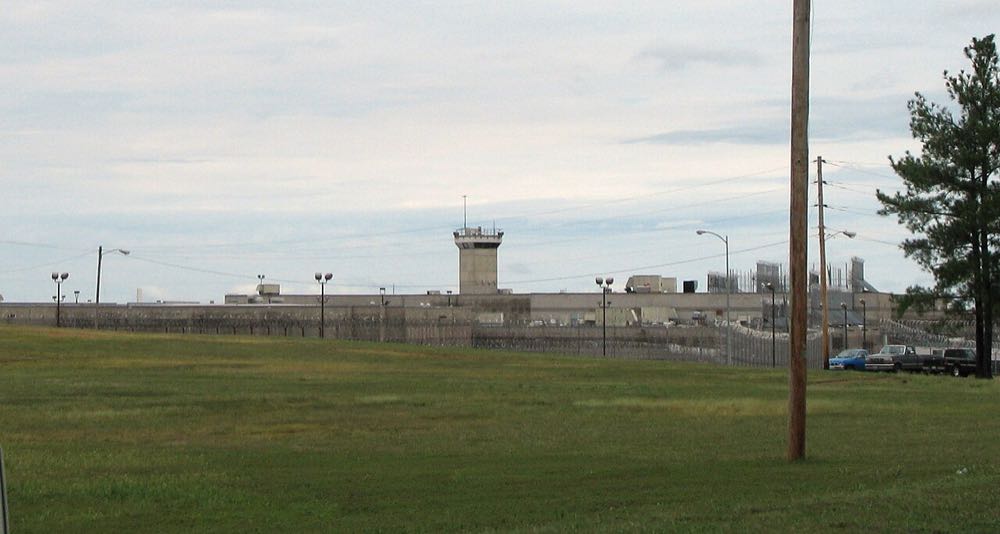

The Missouri Department of Corrections (MO DOC) is the state agency responsible for the incarceration and supervision of adults convicted of felony offenses in Missouri. Headquartered at 2729 Plaza Drive in Jefferson City, Missouri, the department manages a statewide network of correctional facilities that collectively hold tens of thousands of incarcerated individuals. With over 76,000 historical arrest and booking records on file in our directory for facilities in the MO DOC system, AllRecentArrests.us is here to help families find their loved ones and navigate the system with confidence.
About the Missouri Department of Corrections
The MO DOC operates 21 correctional centers — 19 for adult men and two for women — plus community release centers and supervision programs. The facilities span the state, from Kansas City in the west to St. Louis in the east, with many located in mid-Missouri communities. The department can be reached at its main number, 573-751-2389, and its official website is doc.mo.gov.
Missouri's correctional facilities are organized by security custody level:
- Custody Level 1: Minimum security — inmates in this level may work in the community or at low-supervision assignments.
- Custody Level 2: Medium security — the most common classification for Missouri state inmates.
- Custody Level 5: Maximum security — reserved for the highest-risk individuals, including those serving life sentences.
Adult male prisoners are typically processed through one of three Reception and Diagnostic Centers (Eastern, Fulton, or Western) before assignment to a permanent facility. All incoming female prisoners, including adult women and girls under 17 convicted as adults, are sent to the Women's Eastern Reception, Diagnostic & Correctional Center in Vandalia.
How to Find an Inmate in Missouri DOC
The MO DOC provides a free online Offender Search tool at doc.mo.gov. You can search by:
- First and last name
- DOC number
- Date of birth
Search results typically include the individual's current facility, custody level, projected release date, and sentence information. For individuals who have recently been transferred or newly received, allow a few days for the system to update. You can also call MO DOC at 573-751-2389 to speak with a staff member who can assist with locating recently admitted individuals.
If your loved one is not yet in the DOC system — for example, if they've just been arrested and are still in a county jail — contact the county sheriff's office in the county where they were arrested.
Visiting Someone in Missouri DOC
Regular visitation is allowed at all MO DOC facilities except Reception and Diagnostic Centers, which restrict visits during the initial intake period. Standard visiting hours are:
- Fridays: 9:30 AM – 1:30 PM and 2:30 PM – 6:30 PM
- Saturdays and Sundays: 9:30 AM – 1:30 PM and 2:30 PM – 6:30 PM
Each offender is allowed an approved visitor list of up to 20 visitors. To be added to the list, you must submit a Visitor Application, which you obtain from your housing unit officer or counselor. The application requires your identifying information and is subject to a background check. The approval process can take several weeks.
On visiting days, bring a government-issued photo ID. You will pass through a security checkpoint, which may include metal detectors, ion scanners (for drug residue), and pat-down searches of both adults and children. Do not bring prohibited items such as cell phones, outside food, or excess cash.
Dress code requirements include no clothing that resembles inmate uniforms (gray, khaki, orange), no revealing or tight-fitting garments, and no open-toed shoes. Violations may result in being turned away. Confirm specific dress code rules with the facility before traveling.
Sending Mail to Missouri DOC Inmates
The MO DOC has specific procedures for processing incoming mail to prevent contraband from entering facilities. Key rules include:
- Address: Use the inmate's full legal name, DOC number, and the facility's mailing address. Each facility's address is listed at doc.mo.gov/facilities.
- Envelopes: Standard white envelopes only. No padded mailers, colored envelopes, or envelopes with printing or designs.
- Photos: Typically permitted in limited quantities (check facility rules). Photos must be commercially developed — no Polaroids, no computer-printed photos. No sexually explicit or gang-related images.
- Publications: Books and magazines must be sent directly from a publisher or retailer. Most facilities require new publications only.
- Prohibited items: No cash, checks, money orders, stamps, stickers, glitter, spiral-bound notebooks, or anything that could be used to introduce drugs.
- Legal mail: Mark as "Legal Mail" and send directly to the facility. Must be opened only in the inmate's presence.
The MO DOC has updated its mail procedures in recent years following the discovery of drug-laced paper. Check doc.mo.gov for the most current policies, as rules may have changed since this article was written.
Phone Calls in Missouri DOC
Missouri DOC uses Securus Technologies for inmate telephone services. Calls are not free. To receive calls from a Missouri DOC inmate:
- Create a Securus account at securustech.net or call 1-800-844-6591.
- Fund your account using a credit or debit card.
- Register your phone number so the inmate can call you.
- Calls are deducted from your Securus account balance.
All calls are subject to recording and monitoring. Calls to attorneys using designated attorney phone numbers may be unmonitored — check with the facility. Each call is typically limited to 15–20 minutes. Inmates may be allowed a certain number of calls per day or week, depending on their custody level.
Sending Money to Missouri DOC Inmates
Commissary funds can be deposited through Securus or approved third-party services. Options typically include:
- Online via Securus: Log in to your Securus account and select the option to send funds to the inmate's commissary account.
- Western Union or MoneyGram: Some MO DOC facilities accept third-party wire transfers. Check doc.mo.gov for approved methods at your specific facility.
- Money order by mail: Send a money order payable to the Missouri Department of Corrections — Inmate Canteen, with the inmate's full name and DOC number noted in the memo line. Confirm the exact mailing address with the facility.
Funds can be used for commissary purchases, phone credits, and other inmate account needs. Processing times vary — online transfers are fastest, mail-in orders may take a week or more.
Programs and Rehabilitation in Missouri DOC
Missouri DOC offers programming to address education deficits, vocational needs, and behavioral risk factors:
- Academic Education: GED preparation and adult basic literacy at all facilities.
- Vocational Training: Trades and job-skills programs in areas like welding, HVAC, culinary arts, construction, and computer technology.
- Cognitive Behavioral Programs: Thinking-errors-based programs designed to address criminal thinking patterns.
- Substance Abuse Treatment: Residential and outpatient programs for alcohol and drug dependency.
- Religious and Faith-Based Programming: Chaplain services, Bible study, and volunteer faith programs across all facilities.
- Reentry Services: Job readiness, housing navigation, and post-release planning through Missouri's Offender Reentry Initiative.
Missouri in the National Context
Missouri houses over 76,000 individuals across its corrections system when counting both state facilities and community supervision. The department has worked in recent years to expand cognitive behavioral programming and reduce recidivism rates through evidence-based practices. Families can stay informed about legislative changes and reentry resources through the MO DOC website and organizations such as the Missouri Association of Social Welfare and the Show-Me Justice coalition.
Support Resources for Families
- MO DOC Main Line: 573-751-2389 | Fax: 573-751-4099
- Offender Search: doc.mo.gov
- Securus Phone Service: securustech.net | 1-800-844-6591
- Missouri Legal Services: lsmo.org
- AllRecentArrests.us: Inmate search, letter service, care packages, phone discounts, bail help
Understanding the Missouri DOC Classification and Transfer Process
When a newly sentenced individual enters the Missouri DOC system, they first spend several weeks at a Reception and Diagnostic Center (RDC) before being assigned to a permanent correctional center. During this intake period, staff conduct medical, mental health, and educational assessments, and use standardized instruments to determine the appropriate custody level and facility assignment. Families should expect limited contact during this period and should check the MO DOC Offender Search at doc.mo.gov regularly for facility updates.
Transfers between facilities can also happen at any point during a sentence, triggered by behavior, custody reclassification, medical needs, programming availability, or population management. When a transfer occurs, mail access is interrupted until the inmate is settled at the new facility. Check the offender search tool for the updated facility address and contact information before sending new correspondence.
Supporting a Loved One Through the Missouri System
- Know the DOC number. The unique DOC number is required for all MO DOC transactions — mail, phone accounts, and money deposits. Find it through the offender search at doc.mo.gov.
- Contact the assigned case manager. Each incarcerated individual in the MO DOC is assigned a case manager who handles classification, program referrals, transfer requests, and release planning. They are your primary contact for questions about your loved one's situation.
- Understand the earned time credit system. Missouri inmates can earn sentencing credits through good behavior and program participation. Ask the case manager how current participation in programming may affect the release date.
- Plan for parole hearings. Missouri has an indeterminate sentencing structure, meaning parole eligibility depends on the Board of Probation and Parole's review. Families can submit letters of support to the Board before hearings.
- Use the Missouri Reentry Process (MRP). The MO DOC has a structured reentry planning process that begins 18 months before the projected release date. Families can participate in this planning to help ensure a stable transition back to the community.
For legal assistance and advocacy, Missouri Legal Services (lsmo.org) and the Roderick and Solange MacArthur Justice Center in St. Louis provide resources for individuals and families navigating the Missouri corrections system.
Missouri Parole and Release: What Families Should Know
Missouri uses indeterminate sentencing for most felony offenses, meaning a judge sets a fixed sentence length, but the Missouri Board of Probation and Parole (MBPP) determines the actual release date after the minimum portion of the sentence is served. For many offenses, the minimum is set at one-third of the total sentence. Parole hearings are conducted by the Board, which considers institutional behavior, program participation, reentry plan, and victim impact statements.
Families can submit letters of support to the Missouri Board of Probation and Parole before a scheduled hearing. These letters should be specific about the support you can provide — housing address, employment connections, transportation — rather than general character references. Ask the case manager for the correct submission address and timeline for the specific facility and hearing date.
After release, Missouri parolees are supervised by probation and parole officers through regional offices across the state. The Missouri Offender Reentry Initiative coordinates services, including job placement, housing referrals, and access to treatment. Contact your local MBPP district office or visit doc.mo.gov for current reentry resources available in the specific release county.
Additional Community and Family Support Resources in Missouri
For families and formerly incarcerated individuals in Missouri, a growing network of community organizations provides practical reentry support. The Missouri Association of Social Welfare (MASW) advocates for criminal justice reform and connects families to resources statewide. The Show-Me Justice coalition monitors incarceration policy. In the Kansas City area, Reentry Northwest and the Guadalupe Centers offer workforce development and housing assistance. In St. Louis, the Decarcerate STL initiative and the Metropolitan St. Louis Equal Housing and Opportunity Council assist with fair housing access — a common barrier for returning citizens. Many county courthouses also have self-help legal clinics where individuals can receive guidance on expungement, which can help clear eligible records and improve employment and housing prospects after release.
Expungement in Missouri: Effective 2018, Missouri law allows expungement of many misdemeanor and felony convictions after a waiting period (typically 3 years for misdemeanors, 7 years for felonies), provided the individual has no subsequent convictions and the offense is eligible. An expunged record is removed from public view and does not need to be disclosed on most job applications. If your loved one is approaching release, consulting with a Missouri Legal Services attorney about expungement eligibility is a practical step in reentry planning that can significantly improve long-term employment and housing outcomes.
Inmate service providers at Missouri Department of Corrections (MO DOC)
Like most US jails and prisons, the Missouri Department of Corrections (MO DOC) relies on private companies for phone calls, video visits, money transfers, and care packages, each with its own fees and sign-up steps. Nationwide the most common providers are Securus and ViaPath (GTL) for calls and video, JPay and Access Corrections for sending money, and Access Securepak for care packages.
Not sure which company serves the Missouri Department of Corrections (MO DOC)? Our inmate service provider directory explains how each one works, what it charges, and how to set up an account before you pay.