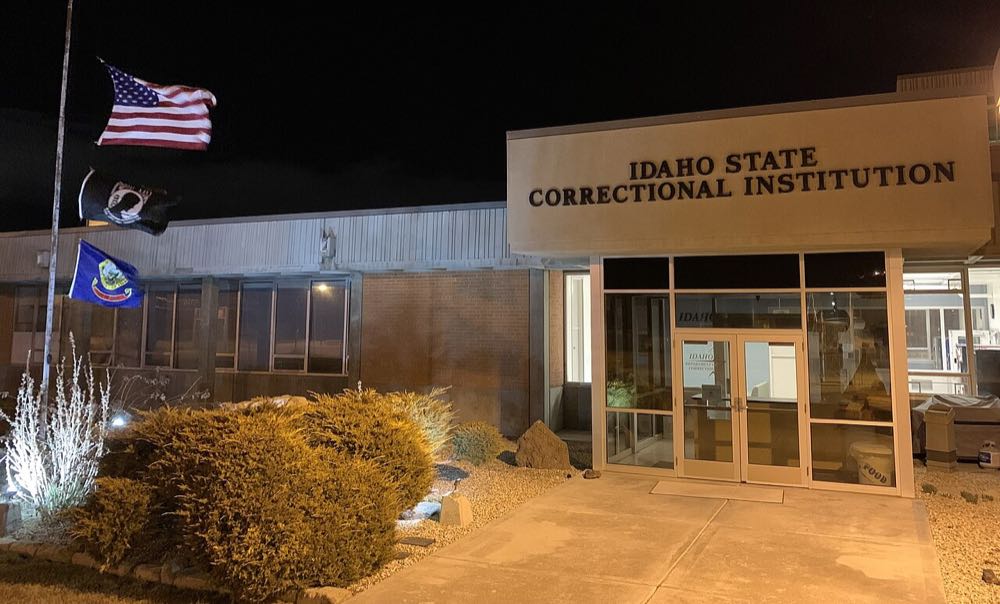

The Idaho Department of Correction (IDOC) is the state agency responsible for the incarceration, supervision, and rehabilitation of adults convicted of crimes in Idaho. Headquartered at 1299 North Orchard Street, Suite 110, in Boise, Idaho, the IDOC manages a statewide network of prisons, community reentry centers, and supervision programs. As of June 30, 2025, the IDOC's incarcerated population stood at 8,168 individuals, housed across ten state-owned prisons and five community reentry centers, with some held in county jails and, when necessary, out-of-state contract facilities. If you have a loved one in IDOC custody, this guide explains how to find them, stay connected, and understand the programs available.
About the Idaho Department of Correction
The IDOC oversees roughly 8,000 incarcerated individuals at any given time, plus a much larger population under community supervision (probation and parole). The department's facilities range from the high-security Idaho Maximum Security Institution to minimum-custody community reentry centers that help individuals transition back into society. Idaho uses a notable "rider" program — a retained-jurisdiction program in which a judge sends a person to IDOC for an evaluation and programming period (typically up to a year) before deciding whether to place them on probation or commit them to prison.
The department's main phone number is 208-658-2000, its email is inquire@idoc.idaho.gov, and its official website is idoc.idaho.gov. The records-on-file figure associated with this listing reflects historical booking records accumulated over time, not the current population.
Idaho's incarcerated population has been growing — FY2025 saw a net increase of 2.4% over the prior year, with the term population up 4.4% and parole violator population up 12.2%. This growth has put pressure on the system, occasionally requiring the state to house individuals in county jails or out-of-state facilities while permanent capacity catches up.
How to Find a Resident in Idaho DOC
The IDOC provides a free online Resident/Client Search tool at idoc.idaho.gov. (Idaho uses the term "resident" rather than "inmate" in keeping with its rehabilitation-focused language.) You can search by:
- The person's name
- Their IDOC number
Search results show the individual's current facility, custody status, and other public information. You can also search PrisonAssist.com for historical booking records. If you cannot find someone or need help, call the IDOC at 208-658-2000 or email inquire@idoc.idaho.gov.
Keep the IDOC number handy once you have it — it is required for visiting registration, tablet messaging, phone account setup, and money deposits. Note that residents in the rider program or those recently transferred may take a few days to appear in the search system.
Visiting Someone in Idaho DOC
In-person visitation is available at IDOC facilities, with the department maintaining family-friendly visitor processing centers that include waiting areas with seating, restrooms, vending machines, and designated child areas with toys and activities. Here's how to participate:
Getting Approved to Visit
To visit, you must be on the resident's approved visiting list. The resident submits a visiting application listing prospective visitors, who are then screened. The approval process can take a few weeks. Individuals with certain criminal histories may be denied.
Visiting Hours and Status
Each IDOC facility has its own visiting schedule. The department maintains an "In-Person Visitation Status by Facility" page at idoc.idaho.gov showing current hours and whether visiting is normal or modified at each institution. Always check this page before traveling, as visiting can be suspended or modified due to operational needs or lockdowns.
What to Bring and Dress Code
- Bring a valid government-issued photo ID.
- Dress conservatively — avoid revealing clothing, clothing resembling resident or staff uniforms, and excessive accessories.
- Minors must be accompanied by an approved adult.
- You will pass through security screening, including a metal detector.
Sending Mail and Tablet Messaging to Idaho DOC Residents
The IDOC supports both traditional postal mail and electronic tablet messaging. For postal mail:
- Address mail to the resident's full name, IDOC number, and the facility's mailing address (found on idoc.idaho.gov).
- Include your full return address.
- All incoming mail is inspected for contraband. No cash, stamps, stickers, or items that could carry drugs.
- Legal mail is handled separately and must be clearly marked.
For faster communication, the IDOC has equipped residents with tablets, and electronic messaging is available through GettingOut (by ViaPath/GTL). To send and receive messages, create and fund a GettingOut account using your resident's IDOC number. Tablet messaging is often faster than postal mail and lets you exchange messages and, in some cases, photos. Visit gettingout.com to set up an account.
Phone Calls in Idaho DOC
The IDOC uses ICSolutions (Inmate Calling Solutions) as its telephone service provider. To receive calls from someone in IDOC custody:
- Set up an account with ICSolutions at icsolutions.com or by calling their customer service line.
- Fund your account so the resident can call you.
- Register your phone number with the account.
- All calls except confidential legal calls are recorded and monitored.
Call rates and any free-call allowances are posted on the ICSolutions and IDOC websites. The combination of tablet messaging through GettingOut and phone calls through ICSolutions gives families multiple channels to stay in touch.
Sending Money to Idaho DOC Residents
Money deposited into a resident's account can be used for commissary purchases (food, hygiene, writing supplies), phone credits, and tablet messaging. Deposit options typically include:
- Online: Through GettingOut/ViaPath or the IDOC's approved deposit vendor — usually the fastest method.
- By phone: Call the approved deposit vendor to make a credit/debit card deposit.
- By mail: Send a money order to the facility's resident account office following IDOC's instructions.
Always include the resident's full name and IDOC number with any deposit, and keep your receipts. Confirm the current approved deposit vendor on idoc.idaho.gov, as vendors can change.
Programs and Rehabilitation in Idaho DOC
The IDOC invests in programming designed to reduce recidivism and prepare residents for successful reentry. Recent state budgets have earmarked funds specifically for mental health treatment and vocational training. Programs include:
- Educational Programs: Adult basic education, GED preparation, and literacy instruction.
- Vocational Training: Job-skills programs in trades that prepare residents for employment after release — a recent budget designated approximately $1.5 million for vocational training initiatives.
- Substance Abuse Treatment: Programs addressing addiction, including treatment delivered through the rider (retained jurisdiction) program.
- Mental Health Services: Expanded mental health treatment, with a recent budget allocating roughly $2 million to grow these options.
- Cognitive Behavioral Programs: Interventions targeting criminal thinking patterns.
- Reentry Programs: Community reentry centers (five statewide) provide lower-custody, transition-focused settings that help residents reintegrate into the community before full release.
Understanding Idaho's Rider Program and Parole
Idaho's "rider" program — formally the retained jurisdiction program — is a distinctive feature of the state's system. When a judge places someone on a rider, the person is sent to IDOC for an evaluation and programming period (often substance abuse or cognitive behavioral programming) lasting up to a year. At the end, the judge decides whether to release them on probation or commit them to prison. Families of someone on a rider should understand that this is a critical evaluation period — strong program participation directly influences the judge's decision.
For sentenced individuals, the Idaho Commission of Pardons and Parole determines parole eligibility and release. Program participation, institutional behavior, and a solid reentry plan all factor into parole decisions. Families can submit support information and should work with the resident's case manager to plan for release.
Idaho in the National Context
Idaho's incarcerated population has been growing faster than its prison capacity, leading the state to rely on county jails and occasionally out-of-state facilities. This makes it especially important for families to confirm exactly where their loved one is held using the Resident/Client Search tool. The state continues to invest in mental health and vocational programming as part of broader efforts to control population growth through reduced recidivism. Families can stay informed through idoc.idaho.gov and Idaho's published FY incarcerated population reports.
Planning Visits and Communication Across Idaho's Distances
Idaho is a large, rural state, and IDOC facilities are spread out — many are clustered in the Boise area at the South Boise prison complex, but others are located in more remote parts of the state. For families who live far from a facility, the combination of GettingOut tablet messaging and ICSolutions phone calls is essential for maintaining regular contact between in-person visits. Take advantage of the family-friendly visitor processing centers, which include child areas, when you do visit in person, and always check the In-Person Visitation Status by Facility page before traveling, since visiting can be modified on short notice.
Supporting a Loved One Through Idaho's System
Families who stay engaged improve outcomes. Practical steps include: knowing the IDOC number for all transactions; setting up GettingOut and ICSolutions accounts early so communication is ready as soon as your loved one is placed; and connecting with the assigned case manager, who handles classification, programming, and release planning. If your loved one is on a rider (retained jurisdiction), understand that the programming period is a critical evaluation — encourage full participation, since the judge's decision to grant probation or commit to prison depends heavily on it. For sentenced individuals, the Idaho Commission of Pardons and Parole reviews cases for release; program completion, good conduct, and a solid reentry plan all matter. Idaho's five community reentry centers offer a lower-custody, transition-focused step before full release — ask whether your loved one is eligible. As Idaho's population continues to grow faster than capacity, confirming exactly where your loved one is held (in-state prison, county jail, or out-of-state contract facility) using the Resident/Client Search is especially important.
Idaho's Sentencing Structure and What It Means for Release
Idaho uses an indeterminate sentencing structure in which a court imposes a fixed term divided into a minimum (the "fixed" portion that must be served before parole eligibility) and a maximum (the "indeterminate" portion). For example, a sentence of "2 years fixed plus 3 years indeterminate" means the person becomes parole-eligible after the 2-year fixed portion. Understanding this structure helps families anticipate when their loved one will be considered for release. The Idaho Commission of Pardons and Parole reviews cases at the end of the fixed portion and weighs institutional conduct, program completion, and the quality of the reentry plan. Families can submit information in support of parole and should work closely with the case manager to develop a strong release plan — including confirmed housing and employment — well before the parole eligibility date. A well-prepared plan can be the difference between a grant and a denial.
Community Reentry Centers: Idaho's Transition Model
Idaho's five community reentry centers (CRCs) represent a lower-custody, transition-focused step that bridges incarceration and full release. Residents nearing the end of their term may be placed in a CRC, where they can pursue employment in the community, reconnect with family, and build the practical foundations for a stable life — all while remaining under supervision. For families, a CRC placement is a hopeful sign and an opportunity to actively support reintegration: helping with transportation to work, providing a stable place to return to, and reinforcing positive routines. Ask the case manager whether your loved one is eligible for CRC placement and what the criteria are. Engaging with this transition phase, rather than waiting until the day of release, gives your loved one the strongest possible start.
Support Resources for Families
- IDOC Main Line: 208-658-2000
- Email: inquire@idoc.idaho.gov
- Resident/Client Search: idoc.idaho.gov/content/prisons/resident-client-search
- GettingOut (Tablet Messaging/Deposits): gettingout.com
- ICSolutions (Phone): icsolutions.com
- PrisonAssist.com: Inmate search, letter service, care packages, phone help
Inmate service providers at Idaho Department of Corrections (ID DOC)
Like most US jails and prisons, Idaho Department of Corrections (ID DOC) relies on private companies for phone calls, video visits, money transfers, and care packages, each with its own fees and sign-up steps. Nationwide the most common providers are Securus and ViaPath (GTL) for calls and video, JPay and Access Corrections for sending money, and Access Securepak for care packages.
Not sure which company serves the Idaho Department of Corrections (ID DOC)? Our inmate service provider directory explains how each one works, what it charges, and how to set up an account before you pay.