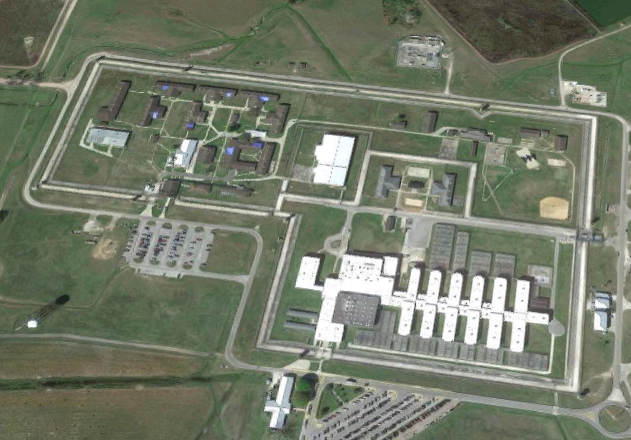
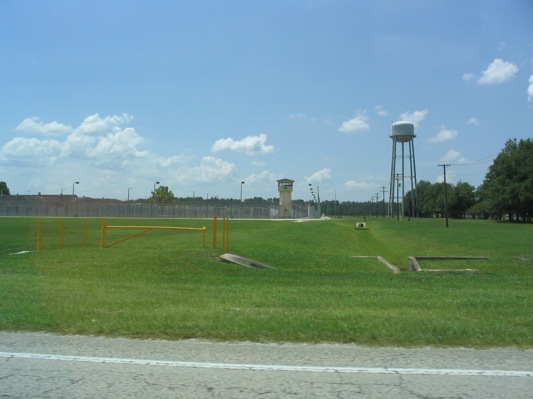

The Florida Department of Corrections (FDC), also known as FL DOC, is the state government agency responsible for the operation of all state prisons and the supervision of offenders on community supervision across Florida. With its headquarters at the Doyle Carlton Building, 501 South Calhoun Street, Tallahassee, FL 32399, FDC is the third-largest state prison system in the United States and the single largest agency administered by the State of Florida. If you have a loved one in FDC custody, this guide covers everything you need — how to find an inmate, how to visit, how to send mail, how to deposit money, and how to take advantage of programs that can help your family member succeed after release.
FDC by the numbers
As of the most recent reporting period, Florida DOC directly oversees 135 facilities statewide, including:
- 49 major correctional institutions
- 16 facility annexes
- 28 work camps
- 9 FDC-operated work-release centers plus 21 privately operated work-release sites
- 7 contractor-operated facilities
- 2 re-entry centers, 2 road prisons/forestry camps, and 1 basic training camp
The department supervises roughly 89,000 people in custody and more than 144,000 offenders on community supervision — parole, probation, or other post-release monitoring. FDC employs approximately 23,500 people, about three-quarters of whom are sworn certified corrections officers or probation officers. Its annual budget exceeds $3.8 billion, and it costs roughly $28,855 per year to incarcerate one person in a Florida state facility (about $79 per day).
How to find an inmate in the Florida DOC
The single most important piece of information when looking for someone in FDC custody is their DC number — a unique, six-character Department of Corrections identification number assigned to every sentenced offender. You can search for an inmate for free using the department's Corrections Offender Network tool at fdc.myflorida.com by entering their first name, last name, or DC number. Aliases can also be searched. If your search returns no results, the person may still be in a county jail (awaiting sentencing) rather than a state facility — in that case, contact the relevant county Sheriff's office.
Once you locate the record, the offender detail page shows the current facility, projected release date, full offense history, and photo. This page is also where you will find the scheduling link for visits once you are approved as a visitor.
Visitation at Florida state prisons
Visitation in Florida's state prison system is a structured privilege that requires advance preparation. Follow these steps carefully to avoid a wasted trip.
Step 1: Submit a visitation application
Every prospective visitor 12 years of age or older must complete Form DC6-111A, Request for Visiting Privileges. The inmate receives up to 15 copies of this form upon arrival at their permanent facility; you can also download the current version from the FDC website. Fill out every field completely — leaving any blank causes automatic denial. Where a field does not apply, write NA. Submit the completed form by U.S. mail or email to the classification department at the specific institution where your loved one is housed. Children under 12 do not need to complete the form but must always be accompanied by an approved adult visitor.
Approval typically takes around 30 days. The inmate — not you — will be notified of the decision. Do not visit until the inmate tells you that you are approved. Arriving without approval will result in being turned away.
Step 2: Schedule each visit online
Once approved, you must schedule every week's visit through FDC's automated scheduling system. Requests must be submitted between Monday at 5:00 a.m. EST and Wednesday at 5:00 p.m. EST for the following weekend's visit. Walk-up visits without a prior scheduling submission are not accommodated — no exceptions.
To access the scheduling form, search for the inmate on the Offender Network. If they are eligible for visits, a "Schedule a Visit" button appears beneath their visitation status. If no button is shown, the inmate is either ineligible or requires special coordination with the facility.
Step 3: Arrive on time
Standard visiting hours are Saturday and Sunday, 9:00 a.m. – 3:00 p.m. Eastern Time (8:00 a.m. – 2:00 p.m. Central). Registration opens at 8:15 a.m. ET (7:15 a.m. CT), and visitors may park beginning at 7:30 a.m. ET. No visitors are processed after 2:00 p.m. ET unless authorized by the duty warden — arriving late means your visit does not happen. Some institutions designated as Incentivized Prisons also offer additional visiting on Thursdays and Fridays.
Visitation rules quick reference
- Visitors 16 and older must present valid government-issued photo ID.
- All persons are subject to a search of their person and possessions before entry.
- Only pre-approved visitors may visit; no more than five approved visitors per session.
- A strict dress code applies — clothing may not resemble inmate or staff uniforms. Check with the specific facility for its list.
- Visitors may bring up to $50 in cash ($1, $5, $10, and $20 bills only) for use in vending machines during the visit.
- Contraband (cell phones, drugs, weapons) on department property is a felony under Florida Statutes §944.47 and is aggressively prosecuted.
How to send mail to a Florida state inmate
Florida's inmate mail system is fully electronic. All routine correspondence is processed at a central scanning facility in Tampa, digitized, and forwarded to the inmate's tablet or housing-unit kiosk — it is not delivered as physical paper. Send all letters to the centralized processing address:
[Inmate's Last Name, First Name, DC Number]
PO Box 23608
Tampa, FL 33623
Do not mail directly to the prison — it will be rejected and returned. Only U.S. Postal Service deliveries are accepted (no FedEx, UPS, or other carriers). Use standard envelopes only: no padded envelopes, boxes, bubble wrap, Priority Mail cardboard envelopes, multi-layer packaging, or metal-clasp envelopes. Correspondence must be written in English, Spanish, or Creole unless the inmate has prior written warden approval for another language. All mail is opened, examined, and read by designated department staff.
Items prohibited in inmate mail
- Cash, personal checks, or money orders (use JPay for transfers)
- Stamps (other than postage affixed to the outside of the envelope)
- Stickers or adhesive labels inside the envelope
- Glitter, glue, tape, staples, or paper clips
- Metal parts of any kind
- Polaroid photographs (standard 4″ × 6″ prints from approved sources are permitted)
- Musical greeting cards or any card containing electronics
- Hardcover books (books must be shipped directly from publisher or an approved vendor)
- Lottery tickets, matchbooks, or other non-communicative items
- Laminated materials
- Any content soliciting pen-pal services, three-way calling, or postage-stamp purchases
Sending money to a Florida DOC inmate
Inmate trust account deposits are processed exclusively through JPay, the department's authorized provider. Four methods are available:
- Online at jpay.com — fastest option; funds typically post within 1–3 business days. Pay by credit card, debit card, or bank transfer.
- By phone at 1-800-574-5729 — available 24 hours a day, 7 days a week.
- In person at MoneyGram or ACE Cash Express — locate a participating agent, provide the inmate's DC number, and funds usually arrive within one business day.
- By mail — send a money order or cashier's check (no personal checks or cash) payable to JPay to: JPay, PO Box 260130, Hollywood, FL 33026. Allow up to 10 business days for processing.
Every method carries a service fee that varies by amount and payment type. Review JPay's current fee schedule at jpay.com before sending. Florida Statutes permit FDC to charge inmates for the cost of their incarceration — up to $50 per day or $250,000 for a life sentence — and these charges may be collected from trust account balances.
Phone calls and electronic messaging
Every general-population housing unit in FDC is equipped with secure kiosks and tablets where inmates can make calls, exchange secure electronic messages via JPay, and access educational programming. Phone calls are initiated by the inmate and billed at rates set under the department's telecom contract. Costs add up quickly, particularly for families receiving regular daily calls. Our discounted phone calls service provides a local access number that may meaningfully lower your per-minute rate and reduce your household's monthly call expenses.
Rehabilitation and reentry programs
FDC operates an extensive range of programs aimed at reducing recidivism and preparing incarcerated people to successfully reintegrate into their communities. According to department reporting, Florida's three-year recidivism rate (return to prison within 36 months of release) has declined steadily, from 27.7% for the 2008 cohort to 21.2% for the 2019 cohort. Programs include:
- Academic education — GED and adult basic education, vocational certificates in welding, HVAC, culinary arts, construction trades, and more, and college courses at select facilities.
- Substance abuse treatment — therapeutic communities, residential substance abuse treatment programs (RSATPs), and drug education courses.
- Faith-based initiatives — dedicated faith-based dormitories operate at several facilities.
- Institutional work assignments — road prisons, forestry camps, and facility work squads build job skills and reduce inmate idleness.
- Work-release centers — inmates in the final phase of their sentence live in a supervised center while holding outside employment, allowing them to save money, pay restitution, and reconnect with their communities before full release.
- Re-entry assistance — Transition Officers — a role dating back to 1959 — help inmates plan housing, employment, and community support before their release date.
Inmate population demographics
As of June 30, 2022, approximately 93.6% of the FDC population was male and 6.4% female. Among male inmates: 48.5% Black, 38% white, 13% Hispanic. Among female inmates: 63.8% white, 28.4% Black, 0.7% Hispanic. Between 50 and 60 juveniles under 17 are held in the state system; male juveniles are housed at Suwannee Correctional Institution and females at Lowell Correctional Institution.
The top offense categories by population size are murder/manslaughter (18.8% of the population; average sentence 36.7 years), sexual offenses (15.0%; avg. 25.5 years), burglary (13.9%; avg. 15.9 years), violent personal offenses (13.0%; avg. 14.4 years), and robbery (11.8%; avg. 23.4 years).
Department structure and leadership
FDC is led by a Secretary appointed by the Governor. Secretary Ricky D. Dixon has held the position since 2021. His leadership team includes Deputy Secretary Richard Comerford, Chief of Staff Michelle Glady, General Counsel Dan Johnson, and Inspector General Kenneth Sumpter.
Operationally, FDC divides the state into four geographic regions, each managed by a Regional Director. The regions are further subdivided into 20 circuit offices aligned with Florida's twenty judicial circuits — all reporting to Central Office in Tallahassee. The department was established in its current form in 1978, succeeding the Florida Department of Offender Rehabilitation. Its motto is "Inspiring success by transforming one life at a time."
Brief history of the Florida corrections system
Florida's correctional history dates to 1868, when Governor Harrison Reed established the first state penitentiary at the Chattahoochee Arsenal. The state operated a controversial convict lease system — leasing prisoners to private corporations for labor — until a national scandal erupted in 1923 after the death of 22-year-old Martin Tabert, a young man beaten to death at a lumber camp after being arrested for vagrancy. The legislature abolished the system in a 31–1 vote that same year.
In 1957, Governor LeRoy Collins and the legislature overhauled the system, creating the Division of Corrections and shifting its philosophy from punishment to rehabilitation. FDC was established as a standalone cabinet agency in 1978. Today it maintains a line-of-duty memorial at Wakulla Correctional Institution honoring 39 officers who have died in the line of duty since the department's founding.
Sending care packages to Florida inmates
Florida DOC does not permit families to mail physical packages directly to inmates — items sent in unauthorized packaging are returned or destroyed. Approved care packages must be ordered through vendors that hold a current FDC contract. These vendors ship directly to the facility in pre-screened, sealed packaging that has already been approved for content by the department. Approved items vary by contract but commonly include food (shelf-stable snacks, protein supplements, instant coffee, and hygiene products) as well as seasonal packages for holidays. Our care packages service connects you with approved vendors and helps you navigate the specific rules for the facility where your loved one is housed, so your package arrives without being rejected.
Key care-package rules to know:
- All packages must arrive pre-sealed from an FDC-approved vendor — no homemade goods or self-packed boxes.
- Order limits and approved item lists differ by institution; always confirm current rules before ordering.
- Packages are inspected upon arrival, and any prohibited items may result in the entire package being confiscated.
- Timing matters: some facilities have quarterly or semi-annual ordering windows, so plan ahead, especially around holidays when vendors experience high demand.
Death row in Florida
Male inmates sentenced to death in Florida are housed at either Florida State Prison in Raiford (Bradford County) or Union Correctional Institution. Female death-row inmates are housed at the Lowell Correctional Institution Annex in Marion County. Death-row inmates wear orange over-shirts but the same blue trousers as general-population inmates. Florida law authorizes execution by electric chair or lethal injection — the condemned may choose. The department's oak electric chair was constructed by corrections personnel in 1998 and installed at Florida State Prison in 1999. Executions are carried out by a private executioner paid $150 per execution, whose identity may remain anonymous under state law.
Contact information
- Headquarters main line: 850-488-5021
- Bureau of Classification and Central Records (inmate location inquiries): 850-488-9859
- Mailing address: 501 South Calhoun Street, Tallahassee, FL 32399-2500
- Official website: fdc.myflorida.com
For facility-specific visiting hours, approved mail procedures, phone rates, and policies, always contact the institution directly or confirm on the FDC website before traveling or sending correspondence. Policies and procedures vary by facility and are subject to change.
Inmate service providers at Florida Department of Corrections (FL DOC)
Like most US jails and prisons, Florida Department of Corrections (FL DOC) relies on private companies for phone calls, video visits, money transfers, and care packages, each with its own fees and sign-up steps. Nationwide the most common providers are Securus and ViaPath (GTL) for calls and video, JPay and Access Corrections for sending money, and Access Securepak for care packages.
Not sure which company serves the Florida Department of Corrections (FL DOC)? Our inmate service provider directory explains how each one works, what it charges, and how to set up an account before you pay.